
Updated on Jul 9, 2025
Author: Dr. Allie Wright
Revised for Inspire Chiropractic by Davis Madole, Reviewed by Dr. Shah Khan DC, CACCP
When couples begin the journey toward parenthood, they quickly realize that preparing for pregnancy isn’t always as simple as they expected.
One doctor says conception should happen easily after stopping birth control. Another says it may take months—or even years—for the body to recover and regulate. Add in conflicting advice about hormones, detoxing, stress, nutrition, fertility tracking, and male fertility, and it’s easy to feel overwhelmed before the journey even truly begins.
So where do you actually start?
At Inspire, we believe one of the most overlooked pieces of preconception health is the nervous system.
What Is Preconception?
Preconception is the phase before actively trying to conceive, when both partners prepare their bodies for a healthy pregnancy and baby.
This stage often includes:
- Improving nutrition and lifestyle habits
- Reducing stress
- Addressing hormone imbalances
- Managing existing health conditions
- Supporting reproductive health
- Limiting toxin exposure
- Optimizing nervous system function
The goal isn’t just getting pregnant—it’s creating the healthiest possible environment for conception, pregnancy, and development.
Common Fertility & Preconception Challenges
Many couples face obstacles during this phase, including:
- Irregular menstrual cycles
- Hormonal imbalances
- PCOS
- Endometriosis
- Thyroid dysfunction
- Autoimmune conditions
- Low sperm count or sperm quality
- Chronic stress and anxiety
- Digestive and nutritional issues
- Sleep challenges
- Lifestyle-related factors like smoking or excessive caffeine
Every couple’s experience is different, but many are left searching for answers after months—or years—of frustration.
The Missing Piece: Nervous System Dysregulation
One of the biggest root causes we often see connected to fertility struggles is nervous system dysregulation.
A term that becomes important here is dysautonomia, which refers to imbalance within the autonomic nervous system—the system responsible for regulating involuntary functions like:
- Hormones
- Digestion
- Heart rate
- Blood pressure
- Stress responses
- Reproductive function
When the nervous system becomes stuck in chronic stress mode, the body shifts into sympathetic dominance—better known as “fight or flight.”
And biologically, the body does not prioritize reproduction while it believes it is under threat.
This chronic stress response can contribute to:
- Hormonal imbalance
- Irregular cycles
- Ovulation dysfunction
- Reduced blood flow
- Sleep disruption
- Anxiety
- Exhaustion
- Changes in sperm quality and reproductive health
Why the Nervous System Matters So Much
The autonomic nervous system has two major branches:
- Sympathetic Nervous System — fight or flight
- Parasympathetic Nervous System — rest, regulate, and develop
The parasympathetic system—largely controlled by the vagus nerve—is essential during the entire perinatal period, including:
- Preconception
- Pregnancy
- Birth
- Postpartum recovery
When both partners’ nervous systems are regulated and adaptable, the body is better able to support healthy hormone function, blood flow, sleep, digestion, and reproductive processes.
But when chronic stress and subluxation patterns keep the nervous system stuck in overdrive, the body struggles to shift into the calm, restorative state necessary for conception and development.
Measuring Stress Through HRV
One of the most exciting advances in neurological and preconception care is HRV technology.
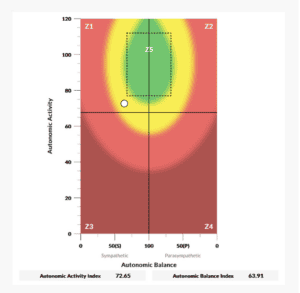
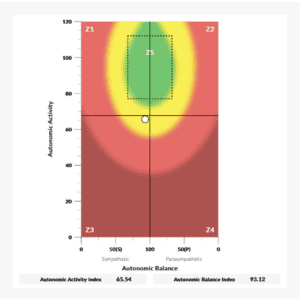
HRV stands for Heart Rate Variability, which measures how adaptable and balanced the autonomic nervous system is.
Higher HRV generally reflects:
- Better adaptability
- Stronger vagus nerve function
- Improved stress resilience
- Better recovery and regulation
Lower HRV often indicates:
- Chronic stress
- Nervous system exhaustion
- Sympathetic dominance
- Reduced adaptability
HRV testing is commonly used as part of the INSiGHT Scans to objectively assess nervous system function for both partners.
These scans help identify:
- Dysautonomia
- Vagus nerve dysfunction
- Neurological stress patterns
- Areas of subluxation and imbalance
From there, customized neurologically-focused care plans can be built to support better regulation and overall health.
What Couples Often Notice First
As nervous system function improves, many couples commonly report changes like:
- Better sleep
- Improved digestion
- More energy
- Reduced brain fog
- Less tension and anxiety
- Improved emotional resilience
- Better overall well-being
The goal is not simply symptom management—but helping the body shift out of survival mode and back toward regulation, adaptability, and restoration.
A Different Perspective on Fertility Care
Many couples arrive at this stage after trying:
- Medications
- Supplements
- Diet protocols
- Hormone tracking
- Detox programs
- Lifestyle changes
- Alternative therapies
While those tools may help support the body, they often don’t directly address chronic nervous system stress patterns that may be contributing to the problem underneath.
That’s why neurologically-focused care aims to work from the inside out—supporting the body’s foundational communication system first.
How to Get the Help You Need
The preconception journey can feel exhausting, emotional, and uncertain. But understanding the role the nervous system plays can provide a completely different lens on fertility and overall health.
Rather than only focusing on hormones or symptoms, more families are beginning to ask: “How well is our nervous system actually functioning?”
Because creating a healthy environment for pregnancy starts long before conception—and the nervous system is at the center of it all.
Request an appointment with us today to get started!
Not local to Inspire? Don’t worry! Visit the PX Docs Directory to find a qualified provider near you. https://pxdocs.com/px-docs/
Original Article: https://pxdocs.com/pregnancy/hrv-technology/
PX Docs has established sourcing guidelines and relies on relevant, and credible sources for the data, facts, and expert insights and analysis we reference. You can learn more about our mission, ethics, and how we cite sources in our editorial policy.