
Updated on Apr 16, 2026
Author: Dr. Tony Ebel, DC, CPPFC, CCWP
Revised for Inspire Chiropractic by Davis Madole, Reviewed by Dr. Shah Khan DC, CACCP
Dad burnout is what happens when the demands of work, parenting, and life consistently outpace your nervous system’s ability to recover.
It’s not just being tired.
It’s chronic physical, emotional, and mental exhaustion that doesn’t fully go away with sleep or a weekend off. Many dads describe it as feeling “on edge,” disconnected, or like they’re running on fumes all the time.
And you’re not alone in it. Nearly half of parents report overwhelming stress, according to the U.S. Surgeon General’s 2024 advisory on parental mental health.
The issue isn’t just workload — it’s nervous system overload.
When your system gets stuck in stress mode, everything starts to feel harder: patience, focus, energy, even connection with your kids and partner.
What Is Dad Burnout?
Dad burnout (sometimes called depleted dad syndrome) is a state of chronic stress and exhaustion that builds over time when recovery can’t keep up with demand.
It often shows up as:
- Constant fatigue, even after sleep
- Irritability over small things
- Emotional numbness or detachment
- Brain fog and poor focus
- Loss of motivation or enjoyment
- Headaches, muscle tension, or gut issues
Many dads push through it quietly, assuming it’s just “part of life.”
But what’s actually happening is that the nervous system is stuck in survival mode.
And that changes how you think, feel, and show up at home.
Why So Many Dads Are Burned Out
Modern fatherhood looks very different than it did a generation ago.
Dads today are more involved in childcare than ever before, while still carrying heavy work and financial pressure. That combination creates constant demand with very little recovery time.
On top of that, most men are conditioned to:
- Push through stress
- Ignore exhaustion
- Stay “strong” no matter what
So instead of slowing down, many dads just keep going until their system starts to break down.
The Nervous System Behind Dad Burnout
Your Autonomic Nervous System controls how your body responds to stress and recovery.
It has two main modes:
- Sympathetic Nervous System (gas pedal — “go, perform, react”)
- Parasympathetic Nervous System (brake pedal — “rest, recover, regulate”)
In a healthy rhythm, these systems balance each other.
But in dad burnout, the system often gets stuck in “gas pedal mode.”
This means your body stays in a constant state of readiness — even when nothing urgent is happening.
Over time, this creates:
- Poor sleep quality
- Higher stress hormones (like cortisol)
- Reduced emotional regulation
- Lower energy and motivation
- Increased inflammation and tension
Even your patience and personality can feel different when your system is overloaded.
This isn’t a mindset issue. It’s a physiological one.
How Chronic Stress Impacts Your Body
When stress becomes constant, it affects far more than mood.
It can influence:
- Sleep (wired at night, exhausted in the morning)
- Digestion (bloating, discomfort, irregularity)
- Hormones (including testosterone balance)
- Energy levels throughout the day
- Emotional reactivity and patience
Many dads also notice they feel less present — like they’re physically there, but mentally elsewhere.
That’s your nervous system prioritizing survival over connection.
Why Most Dads Don’t Ask for Help
A big part of dad burnout is silence.
Many fathers don’t talk about how they’re feeling because they’ve learned to equate struggle with weakness.
So they push harder instead.
But when your nervous system is already depleted, pushing harder doesn’t create strength — it creates deeper exhaustion.
Needing support doesn’t mean you’re failing. It means your system is overloaded and needs recovery, not more pressure.
How Stress Affects the Dad You Want to Be
When your nervous system is stuck in stress mode, it changes more than energy levels.
It can affect:
- How patient you are with your kids
- How connected you feel to your partner
- Your ability to focus and think clearly
- Your emotional reactivity
- Your motivation to exercise, eat well, or engage socially
This is why many dads describe feeling like they’re “not themselves.”
You’re not broken. You’re overactivated and under-recovered.
5 Simple Ways Dads Can Start Recovering
These strategies help shift the nervous system toward more balance and recovery.
1. Move your body daily
Even a short walk or lifting session helps discharge stress and reset nervous system tone.
2. Practice slow breathing
Deep, slow exhalations help activate the parasympathetic “brake pedal.” Try a few minutes before bed or during the day.
3. Fuel your body properly
Prioritize real food — protein, healthy fats, hydration — to stabilize energy and reduce stress load.
4. Prioritize sleep
Sleep is when the nervous system does its deepest repair work. Consistency matters more than perfection.
5. Ask for support
Whether it’s your partner, other dads, or a healthcare provider, support helps break the cycle of isolation and overload.
These steps matter. But for many dads in burnout, they’re only part of the picture.
The Nervous System Root of Dad Burnout
When the nervous system stays stuck in long-term stress mode, lifestyle changes alone can feel like they “help a little” but don’t fully resolve the issue.
That’s because the system driving the burnout is still overactive.
This is where Neurologically-Focused Chiropractic Care comes in — not as a quick fix, but as a way to assess and address nervous system dysregulation at its root.
The focus is on helping the body shift out of chronic survival mode and back into a more regulated state.
What Is Subluxation and Why It Matters Here
Subluxation refers to patterns of stress and dysfunction in the spine that may interfere with nervous system communication.
From a neurological perspective, this can impact how efficiently the brain and body coordinate stress response, recovery, and regulation.
When these patterns are present, the nervous system may have a harder time fully shifting into recovery mode.
How INSiGHT Scans Help Identify Stress Patterns
At Inspire, INSiGHT Scans are used to assess nervous system function, including:
- Thermal scans (autonomic stress patterns)
- sEMG scans (muscle tension and neurological activity)
- HRV testing (balance between stress and recovery systems)
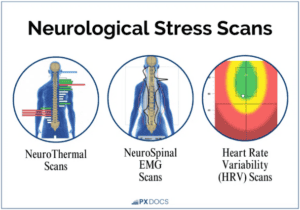
These tools help provide a clearer picture of how the nervous system is functioning — especially in cases of chronic stress and burnout.
For dads, HRV patterns can be particularly insightful, showing how well the body is shifting into recovery mode.
What Recovery Can Look Like
As nervous system regulation improves, many dads report changes like:
- Deeper, more restorative sleep
- Increased patience and emotional control
- Better energy throughout the day
- Improved focus and mental clarity
- Feeling more present with their family
These changes don’t usually happen all at once. They build as the nervous system becomes more balanced and adaptable.
The Bottom Line
Dad burnout isn’t just stress or lack of discipline.
It’s a nervous system stuck in survival mode.
And when the system is overwhelmed, even the best intentions — better sleep, better habits, more effort — can feel like they’re not enough.
The encouraging part is this: the nervous system is adaptable.
With the right support and recovery, it can shift back toward balance, resilience, and regulation.
And when that happens, everything else — energy, patience, presence, and connection — becomes easier to access again.
Request an appointment with us today to get started!
Not local to Inspire? Don’t worry! Visit the PX Docs Directory to find a qualified provider near you. https://pxdocs.com/px-docs/
Original Article: https://pxdocs.com/mental-health/hidden-dad-pressure-strategies-to-overcome-pressure-and-burnout/
PX Docs has established sourcing guidelines and relies on relevant, and credible sources for the data, facts, and expert insights and analysis we reference. You can learn more about our mission, ethics, and how we cite sources in our editorial policy.
SOURCES
- Office of the Surgeon General. (2024). The current state of parental stress & well-being. In Parents under pressure: The U.S. Surgeon General’s advisory on the mental health & well-being of parents. U.S. Department of Health and Human Services. https://www.ncbi.nlm.nih.gov/books/NBK606662/
- Minkin, R., & Horowitz, J. M. (2023). Parenting in America today: A survey report. Pew Research Center. https://www.pewresearch.org/social-trends/2023/01/24/parenting-in-america-today/
- McViegh, T., Finch, I. (2014, June 15). Fathers spend seven times more with their children than in the 1970s. The Guardian. https://www.theguardian.com/lifeandstyle/2014/jun/15/fathers-spend-more-time-with-children-than-in-1970s
- Mbiydzenyuy, N. E., & Qulu, L. (2024). Stress, hypothalamic-pituitary-adrenal axis, hypothalamic-pituitary-gonadal axis, and aggression. Metabolic Brain Disease, 39(8), 1613–1636. https://doi.org/10.1007/s11011-024-01393-w
- Chatmon, B. N. (2020). Males and mental health stigma. American Journal of Men’s Health, 14(4), 1557988320949322. https://doi.org/10.1177/1557988320949322