
Updated on Jun 2, 2026
Author: Dr. Tony Ebel, DC, CPPFC, CCWP
Revised for Inspire Chiropractic by Davis Madole, Reviewed by Dr. Shah Khan DC, CACCP
Oliver had suffered a traumatic birth, including a whiplash-type injury to his upper neck and brainstem. So that was the very first place I went to work with his chiropractic adjustments.
Because he was hooked up to all sorts of machines and monitors, the true neurophysiological impact of those adjustments was visible in real time—not just in how his entire body relaxed and cleared all that tension, but in how you could immediately see his heart rate come down, his respiration improve, and his oxygen levels rise.
There is simply no way to overstate how essential each of those physiological changes was for Oliver in that condition. His traumatic birth led to a hypoxic brain injury on top of something called PPHN—Persistent Pulmonary Hypertension of the Newborn—so nothing mattered more to his healing and recovery than getting his nervous system out of the stuck, sympathetic-dominant, tension-filled state it was in.
Improving his respiration and oxygenation was vital not just to his survival, but to the possibility that he could one day thrive on the other side of the storm he was stuck in. The adjustments not only shifted his nervous system out of that dysregulated state and into a calmer, more relaxed parasympathetic state—they also helped restore the flow of oxygen to his lungs, his brain, and his entire body.
What I witnessed in that NICU wasn’t unique to Oliver. It’s the same thing that happens quietly every time a child gets a neurologically focused adjustment—you just can’t always see it spelled out on a monitor the way I could that day.
Because here’s what makes this specific kind of adjustment so different: its benefits extend far beyond the structure they begin with. Yes, adjustments help restore proper alignment, motion, and function to the spine. But that spinal structure houses and protects the delicate tissues of the central and autonomic nervous system—so every adjustment is a neurological input that reaches the brainstem, cerebellum, and prefrontal cortex. From one small, specific input, you have the potential to influence virtually every function in the body.
But to really understand how this works, we have to let go of the idea that an adjustment is mechanical—something that simply “moves a bone.” The real action isn’t in the structure at all. It’s in the signal that the structure sends. And to see that, we need to talk about how the spine actually talks to the brain.
What Is a Chiropractic Adjustment?
A chiropractic adjustment is a high-velocity, low-amplitude input delivered by a trained Doctor of Chiropractic to a specific segment or region of the neurospinal system. The contact is short, but the input is profound, activating the mechanoreceptors and proprioceptors embedded in the paraspinal muscles and joint capsules. That burst of sensory information travels up the spinal cord to the brainstem and cortex, where the brain re-reads its position, tension, and tone.
The goal isn’t to “pop” or “crack” anything; those sounds are simply gas releasing from joint capsules and have nothing to do with whether the adjustment was effective. The goal is to correct a subluxation—a neurospinal dysfunction pattern that includes three components:
- Physical or biomechanical misalignment
- Joint fixation and reduced motion
- Neurological interference (disrupted neurosensory communication between brain and body)
All three (3) components must be present and addressed.
In children, the adjustment is delivered with even less force than in adults. The amount of pressure is comparable to checking the ripeness of an avocado. The technique is gentle, specific, and child-appropriate through every stage of life.
So, What Is an Adjustment Really?
If you’ve ever watched your child get adjusted in under two minutes and wondered, “Wait—that’s it?”, you’re asking exactly the right question.
Every other healthcare experience has trained you to expect the opposite: 60-minute physical therapy, 45-minute occupational therapy, 30-minute pediatrician visits. Longer must mean more thorough. More hands-on must mean more personalized.
But chiropractic adjustments—especially neurologically-focused ones delivered to children—don’t follow that rule. They’re built on a completely different model. They aren’t trying to stretch a muscle, decompress a disc, or rehab a joint. They’re delivering a precise neurological signal to a specific place at a specific frequency, so the nervous system can do what it was designed to do.
This article walks through the actual mechanism—what the adjustment is doing inside the brain and body, why pediatric adjustments are short by design, how frequency drives healing more than duration, and how a tool called INSiGHT scanning makes the invisible visible. By the end, you’ll see why “time on the table” is the wrong yardstick for what’s really happening.
How Does a Chiropractic Adjustment Affect the Nervous System?
A chiropractic adjustment affects the nervous system by delivering a controlled burst of neurosensory input that the brain uses to recalibrate how it processes information from the body. A 2016 study published in Neural Plasticity demonstrated that manipulation of dysfunctional spinal joints produces measurable changes in prefrontal cortex activity, the area of the brain responsible for executive function, attention, and autonomic regulation. The mechanism is neurological, not muscular.
Here’s what happens in sequence:
- Mechanoreceptor activation: The adjustment stimulates receptors in the paraspinal muscles, which have the highest density of muscle spindles anywhere in the body.
- Brainstem reception: That sensory burst travels through the dorsal column to the brainstem, which controls heart rate, breathing, digestion, and arousal.
- Cortical integration: The brain re-reads the body’s position and tone, producing normalized sensorimotor integration.
- Autonomic shift: The vagus nerve and parasympathetic system are engaged, shifting the body out of sympathetic dominance—the chronic “fight-or-flight” state most dysregulated children are stuck in.
Children with Autism, ADHD, and Sensory Processing challenges frequently share an underlying pattern: Autonomic Nervous System dysfunction (dysautonomia). This reflects brainstem and vagal regulation instability. A precise chiropractic adjustment is one of the few inputs that directly addresses that foundational layer.
A 2021 study in Frontiers in Pediatrics found measurable improvements in brainstem regulation among colicky infants after gentle chiropractic-style vibrational care, supporting early-life nervous system responsiveness to sensory input.
What Is the Difference Between a Structural and Neurological Chiropractic Adjustment?
A structural chiropractic adjustment targets biomechanical pain—low back, neck, sciatica, sports injuries—and typically uses longer sessions with stretching, mobilizing, and multi-region manipulation.
A neurological chiropractic adjustment targets the nervous system and brain-body connection. It’s shorter, more specific, more frequent, and aimed at correcting subluxation patterns that drive Autonomic Nervous System dysfunction.
Same profession. Different goals. Different tools.
There’s a useful four-type chiropractic spectrum:
- Standard spinal chiropractic works on adult musculoskeletal pain
- Functional neurology works on brain-based reflexes and rehabilitation
- Functional medicine addresses gut health, nutrition, and biochemistry
- Neurologically-Focused Chiropractic Care (NFCC) targets subluxation patterns affecting the Autonomic Nervous System using INSiGHT scans and gentle pediatric adjustments
NFCC sits at the foundation—upstream of the entire system.
Why Are Pediatric Chiropractic Adjustments So Short?
Pediatric chiropractic adjustments are short because a child’s nervous system can only absorb so much sensory input before it becomes overwhelmed.
Children with dysregulation are already processing too much input—sensory, emotional, environmental. Adding long sessions would overwhelm rather than help.
A precise input delivered to the primary area of subluxation takes roughly 90 seconds to two minutes. The nervous system then integrates that input over the next 24–72 hours.
Sometimes the most healing thing we can do is give the nervous system less to process, not more.
Why Is Frequency More Important Than Duration?
Neuroplasticity depends on repetition, not duration.
The brain doesn’t rewire from one long session—it rewires from consistent, specific input over time.
A 2008 study in the Journal of Speech, Language, and Hearing Research confirmed that repetition and specificity drive lasting neural change.
That’s why frequency matters more than time on the table. The adjustment is the catalyst—the brain does the remodeling between visits.
Our Approach: INSiGHT Scans
While chiropractors assess subluxation manually through palpation, Inspire Chiropractic also uses advanced INSiGHT scanning technology to measure nervous system function objectively.
INSiGHT scans provide baseline and progress data on:
- Heart Rate Variability (HRV)
- Surface EMG (sEMG)
- Thermal scanning
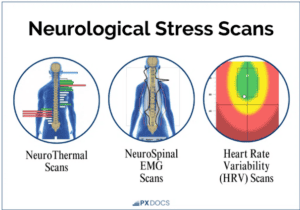
Together, these measures map Autonomic Nervous System regulation and track change over time.
INSiGHT scans are not a treatment or cure for any condition. They are a measurement tool that helps guide care and track nervous system adaptability.
What Should I Expect Between Chiropractic Adjustments?
Between adjustments, the nervous system does the real integration work.
Common early signs of regulation include:
- Improved sleep
- Better digestion and elimination
- Stronger immune resilience
- Improved motor coordination and tone
These are signs the nervous system is shifting out of survival mode and back into regulation.
The Bottom Line for Parents
A neurologically-focused chiropractic adjustment is a precise neurological input—not a mechanical fix. It works through sensory signaling, brainstem processing, cortical integration, and autonomic shift.
Healing doesn’t happen on the table. It happens between visits.
If your child has gone through multiple therapies without lasting change, the missing piece may not be another intervention—but a deeper look at how their nervous system is functioning.
Request an appointment with us today to get started!
Not local to Inspire? Don’t worry! Visit the PX Docs Directory to find a qualified provider near you. https://pxdocs.com/px-docs/
Original Article: https://pxdocs.com/natural-remedies/chiropractic-adjustment/
PX Docs has established sourcing guidelines and relies on relevant, and credible sources for the data, facts, and expert insights and analysis we reference. You can learn more about our mission, ethics, and how we cite sources in our editorial policy.
SOURCES
- Haavik, H., Niazi, I. K., Amjad, I., Kumari, N., Ghani, U., Ashfaque, M., Rashid, U., Navid, M. S., Kamavuako, E. N., Pujari, A. N., & Holt, K. (2024). Neuroplastic responses to chiropractic care: Broad impacts on pain, mood, sleep, and quality of life. Brain Sciences, 14(11), 1124. https://doi.org/10.3390/brainsci14111124
- Lelic, D., Niazi, I. K., Holt, K., Jochumsen, M., Dremstrup, K., Yielder, P., Murphy, B., Drewes, A. M., & Haavik, H. (2016). Manipulation of dysfunctional spinal joints affects sensorimotor integration in the prefrontal cortex: A brain source localization study. Neural Plasticity, 2016, 3704964. https://doi.org/10.1155/2016/3704964
- Hoeve, J. (2021). Clinical evidence of vestibular dysregulation in colicky babies before and after chiropractic treatment vs. non-colicky babies. Frontiers in Pediatrics, 9, 668457. https://doi.org/10.3389/fped.2021.668457
- Gazerani, P. (2025). The neuroplastic brain: Current breakthroughs and emerging frontiers. Brain Research, 1858, 149643. https://doi.org/10.1016/j.brainres.2025.149643
- Kleim, J. A., & Jones, T. A. (2008). Principles of experience-dependent neural plasticity: Implications for rehabilitation after brain damage. Journal of Speech, Language, and Hearing Research, 51(1), S225–S239. https://doi.org/10.1044/1092-4388(2008/018)
- Evans, S., Seidman, L. C., Tsao, J. C. I., Lung, K. C., Zeltzer, L. K., & Naliboff, B. D. (2013). Heart rate variability as a biomarker for autonomic nervous system response differences between children with chronic pain and healthy control children. Journal of Pain Research, 6, 449–457. https://doi.org/10.2147/JPR.S43849
- Centers for Disease Control and Prevention. (2025, July 24). FastStats: Births – Method of delivery. National Center for Health Statistics. Retrieved May 13, 2026, from https://www.cdc.gov/nchs/fastats/delivery.htm