
Updated on Jun 17, 2026
Author: Dr. Tony Ebel, DC, CPPFC, CCWP
Revised for Inspire Chiropractic by Davis Madole, Reviewed by Dr. Shah Khan DC, CACCP
Watching your child struggle with anxiety can feel heartbreaking and overwhelming. You want answers that go beyond managing symptoms and actually create lasting change.
If this feels familiar, you are not alone. Anxiety is one of the most common mental health challenges affecting children today and can impact friendships, school performance, sleep, and family life.
At Inspire Chiropractic, we look beyond the symptoms and focus on the root cause: nervous system function.
Helping a child with anxiety is not about simply masking fear or worry. It is about supporting the nervous system so the body and brain can return to a state of balance, regulation, and resilience.
Anxiety is not just a thought or emotion. It is often a whole-body response involving the nervous system, with the stress response stuck in overdrive and the calming system struggling to keep up.
What Does Anxiety Look Like in Kids?
Children do not always say, “I feel anxious.”
Often, their body and behavior communicate it first.
Common physical signs of anxiety include:
- Frequent stomachaches or headaches
- Racing heartbeat or rapid breathing
- Sweating or feeling shaky
- Trouble falling asleep
- Restless sleep or nightmares
Emotional and behavioral signs may include:
- Excessive worrying
- Irritability or emotional outbursts
- Avoiding activities or situations
- Needing constant reassurance
- Trouble focusing
- Difficulty with school or friendships
Anxiety affects more than emotions. It involves the entire nervous system, which is why it often shows up through multiple areas of a child’s health.
What Actually Causes Anxiety in Children?
Many parents are told anxiety is simply genetic or caused by a chemical imbalance.
While genetics and brain chemistry play a role, they are only part of the story.
The nervous system helps regulate the release and balance of neurotransmitters like serotonin, dopamine, and GABA. When the nervous system is stuck in a chronic stress state, the body’s chemistry can become disrupted as well.
This is why understanding the nervous system is so important.
At Inspire, we often explain this through the concept of the “Perfect Storm.”
The Perfect Storm describes how layers of stress can build over time:
- Prenatal stress
- Birth stressors
- Childhood stress and environmental challenges
During pregnancy, maternal stress can influence a baby’s developing nervous system.
Birth experiences such as C-sections, forceps, vacuum extraction, or prolonged labor can add stress to the developing nervous system.
Then childhood brings additional challenges like illness, antibiotics, injuries, overstimulation, screens, and daily stress.
No single event creates anxiety by itself. But when stress accumulates over time, the nervous system may become stuck in a heightened state of alert.
This same nervous system dysregulation is often seen alongside challenges like ADHD, Autism, Sensory Processing Disorder, and anxiety.
Why Is My Child Stuck in “Fight or Flight”?
A simple way to understand the nervous system is to picture two pedals in a car.
The sympathetic nervous system is the gas pedal. It activates the body for action, focus, and protection.
The parasympathetic nervous system is the brake pedal. It helps the body calm down, digest, rest, and recover.
A healthy nervous system knows when to accelerate and when to slow down.
With anxiety, the gas pedal can become stuck.
The body stays prepared for danger even when there is no immediate threat. This state is called sympathetic dominance and is a sign that the Autonomic Nervous System is struggling to regulate.
The vagus nerve plays an important role in this process by helping activate the body’s calming response.
When the nervous system cannot apply the brakes effectively, children may experience:
- Constant worry
- Emotional overwhelm
- Difficulty calming down
- Poor sleep
- Physical exhaustion
An anxious child is not choosing to feel this way. Their nervous system is working overtime.
Why Is Anxiety Often Worse at Bedtime and in the Morning?
Many parents notice anxiety is strongest at night and first thing in the morning.
This is connected to the body’s stress system, including cortisol regulation.
Normally, cortisol is higher in the morning to help us wake up and lower at night to prepare for sleep.
When the stress response stays activated, this rhythm can become disrupted.
This may lead to:
- Trouble getting out of bed
- Racing thoughts at bedtime
- Difficulty falling asleep
- Restless sleep
Healthy routines help, but supporting the nervous system is also important when stress regulation is the deeper issue.
How Is Childhood Anxiety Measured?
A common question is:
“If anxiety is related to the nervous system, can we actually measure it?”
INSiGHT Scans provide objective information about nervous system function through three assessments:
Heart Rate Variability (HRV)
Measures Autonomic Nervous System balance and the body’s ability to adapt to stress.
Surface EMG (sEMG)
Measures muscle tension patterns and areas where the body may be holding stress.
Thermal Scanning
Measures temperature patterns related to nervous system function along the spine.
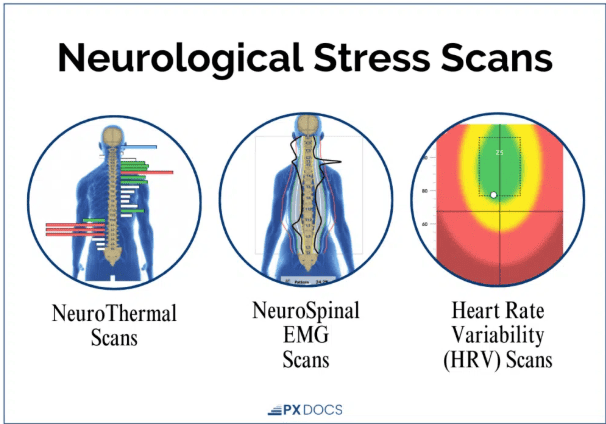
Together, these scans provide insight into whether the nervous system is balanced, stressed, or struggling to regulate.
It is important to understand that INSiGHT Scans do not diagnose anxiety or any medical condition. They are an assessment tool that helps providers better understand nervous system function and create individualized care plans.
The Root-Cause Approach to Helping Kids With Anxiety
Rather than only managing symptoms, Neurologically-Focused Chiropractic Care focuses on supporting the nervous system patterns that may contribute to stress and dysregulation.
One important concept is subluxation.
Subluxation is not simply a bone being “out of place.” It involves changes in spinal function, restricted movement, and altered communication between the brain and body.
When the nervous system experiences stress, especially during early development, these patterns may affect the body’s ability to regulate.
Through INSiGHT Scans and neurological assessments, providers can create customized care plans that may include:
- Gentle, specific chiropractic adjustments
- Nervous system regulation strategies
- Movement and breathing exercises
- Lifestyle recommendations
The goal is to support the nervous system’s ability to shift from stress mode into a calmer, more adaptable state.
This approach is not about replacing therapy, counseling, or other healthcare support. Instead, many families find that when the nervous system is better regulated, children are better able to benefit from the other tools and support around them.
How Can Parents Help a Child With Anxiety at Home?
Professional support is only one part of helping an anxious child. Daily habits at home play an important role too.
Create a Safe, Supportive Environment
Children often regulate through the adults around them.
A calm, understanding parent helps create safety for a child’s nervous system.
Encourage Communication
Let your child know their feelings are valid.
Listen without judgment, ask questions, and help them understand that anxiety does not define them.
Build Predictable Routines
Consistency helps the nervous system feel safe.
Regular:
- Bedtimes
- Meals
- Family routines
- Daily rhythms
can reduce unnecessary stress.
Teach Regulation Skills
Helpful tools include:
- Deep breathing
- Relaxation exercises
- Positive self-talk
- Visualization
These skills help children learn how to manage stressful moments.
Prioritize Movement, Sleep, and Nutrition
The basics matter.
Encourage:
- Outdoor play and physical activity
- Whole-food nutrition
- Hydration
- Consistent sleep
A healthy lifestyle gives the nervous system the resources it needs to adapt.
When Should You Seek Professional Help for Childhood Anxiety?
Some worry is a normal part of childhood.
However, professional support may be helpful when anxiety:
- Interferes with school or home life
- Causes frequent physical complaints
- Creates avoidance of normal activities
- Disrupts sleep
- Leads to ongoing emotional distress
If your child’s anxiety is not improving despite your best efforts, consider working with a provider who looks at the whole picture, including nervous system function.
There Is Hope for Your Anxious Child
Anxiety does not have to define your child’s future.
When parents understand the connection between anxiety and nervous system function, they can begin addressing the root instead of only managing symptoms.
At Inspire Chiropractic, our Neurologically-Focused approach focuses on supporting nervous system regulation and helping children build resilience from within.
With the right support, many children can become calmer, more confident, and better equipped to handle life’s challenges.
Frequently Asked Questions
Can childhood anxiety go away on its own?
Some temporary worries naturally improve with time. However, ongoing anxiety that affects daily life may require additional support. The nervous system is adaptable, and with the right approach, children can learn to regulate stress more effectively.
Is anxiety in children genetic?
Genetics can influence a child’s sensitivity to stress, but it does not determine their future. Environment, lifestyle, and accumulated stressors also play important roles in nervous system regulation.
Can chiropractic care help with a child’s anxiety?
Neurologically-Focused Chiropractic Care does not diagnose or treat anxiety. It focuses on supporting nervous system function and regulation, which may help children better adapt to stress.
What is the difference between normal worry and anxiety?
Normal worry usually passes when the situation changes. Anxiety becomes a concern when it is persistent, overwhelming, and begins affecting daily activities, relationships, sleep, or school.
Is anxiety medication safe for kids?
Medication decisions should always be made with a qualified healthcare provider. Some families use medication as part of their child’s care plan, while others also explore approaches focused on nervous system regulation and lifestyle support.
Why is my anxious child always tired?
A nervous system that stays in a prolonged stress state can become exhausted over time. Children may sleep but still feel tired because their body has difficulty fully resting and recovering.
How long does it take to see changes with Neurologically-Focused Chiropractic Care?
Every child is different. Progress depends on factors like the child’s history, stress load, and nervous system function. INSiGHT Scans can help track changes over time and provide objective feedback as care progresses.
Request an appointment with us today to get started!
Not local to Inspire? Don’t worry! Visit the PX Docs Directory to find a qualified provider near you. https://pxdocs.com/px-docs/
Original Article: https://pxdocs.com/mental-health/helping-kids-with-anxiety/
PX Docs has established sourcing guidelines and relies on relevant, and credible sources for the data, facts, and expert insights and analysis we reference. You can learn more about our mission, ethics, and how we cite sources in our editorial policy.
SOURCES
- Kowalchuk A, Gonzalez SJ, Zoorob RJ. Anxiety Disorders in Children and Adolescents. Am Fam Physician. 2022 Dec;106(6):657-664. PMID: 36521463. https://pubmed.ncbi.nlm.nih.gov/36521463/
- National Library of Medicine. (2023). StatPearls [Internet]. Physiology, Neurotransmitters. https://www.ncbi.nlm.nih.gov/books/NBK539894/
- Tadanki, D., Kaza, P. S., Meisinger, E., Syed, A., Johnson, A., Bainbridge, G., Cho, M., Anigbogu, C., & Gupta, G. (2025). Comprehensive Review of the Impact of Maternal Stress on Fetal Development. Pediatric discovery, 3(3), e70004. https://doi.org/10.1002/pdi3.70004
- CDC. (2026). Anxiety and Depression in Children. https://www.cdc.gov/children-mental-health/about/about-anxiety-and-depression-in-children.html