
Updated on Feb 11, 2026
Author: Dr. Tony Ebel, DC, CPPFC, CCWP
Revised for Inspire Chiropractic by Davis Madole, Reviewed by Dr. Shah Khan DC, CACCP
For most parents, a Christmas concert is full of smiles, excitement, and trying to get the perfect picture. But for my wife and me a few years ago, it was a moment of deep concern for our daughter, Addison.
In 3rd grade, Addison was exposed to neurotoxic chemicals when her school refinished the gym floors while students were still attending school. Soon after, she developed significant motor tics, sleep challenges, and anxiety.
At the Christmas concert, her anxiety was making the tics worse. She repeatedly opened her mouth and stretched her jaw, rolled her eyes, and turned and stretched her neck to the side. Eventually, she also developed torticollis.
If your heart breaks watching your child struggle with motor tics, we understand. In this article, we’ll explain what motor tics are, what may contribute to them, and how a neurological approach may help address the underlying nervous system stress.
What are Motor Tics?
Motor tics are involuntary, repetitive movements that can involve the face, mouth, eyes, head, neck, or shoulders. Vocal tics are involuntary sounds or words.
When motor and vocal tics occur together, a child may be diagnosed with Tourette syndrome. Tics can also occur alongside other neurological conditions.
Although tics may look intentional, they aren’t. A child may temporarily suppress one, but the urge usually builds until the movement or sound happens again.
What are the Symptoms of Motor Tics?
There are two primary types of tics — motor and vocal. For some children, tics are temporary and appear during periods of stress, illness, or development. For others, they can become chronic.
Tics can also be simple or complex.
Simple motor tics may include:
- Quick eye blinking or eye movements
- Tongue movements or sticking out the tongue
- Head twitches or jerks
- Squatting or hopping
- Shoulder shrugging
Complex motor tics may include:
- Facial grimacing
- Touching people or objects
- More involved or repetitive movements
Vocal tics may include:
- Grunting
- Barking
- Hissing
- Sniffing or snorting
- Throat clearing
- Swearing
- Repeating words
- Stammering
What Causes Motor Tics?
Medical literature commonly discusses neurological conditions, genetics, medications, and environmental or toxic exposures as potential contributors to motor tics.
But for many children, tics can also become more noticeable during growth spurts, illness, seasonal changes, injuries, or periods of increased emotional or mental stress.
Motor tics can also occur alongside conditions such as ADHD, Autism, Anxiety, and Sensory Processing Disorder.
At Inspire Chiropractic, we want to look one layer deeper: what is creating so much stress and tension within the child’s nervous system in the first place?
This can be both simple and complex. The simple part is recognizing that an overstressed, dysregulated nervous system can struggle to properly regulate the body. The complex part is understanding that this usually isn’t caused by one isolated event.
This is where we use the concept of the Perfect Storm, along with subluxation and dysautonomia.
Subluxation, in the neurological chiropractic model, refers to dysfunction affecting the communication and regulation of the nervous system. When the sympathetic “fight or flight” system remains overly active and the parasympathetic “rest and digest” system isn’t regulating effectively, the body can become stuck in a state of dysautonomia.
In our clinical experience, children struggling with motor tics often have significant nervous system stress and dysregulation.
One pattern we also commonly see is a history of birth trauma, including emergency C-sections, forceps or vacuum extraction, or induction. Birth interventions can absolutely be medically necessary and lifesaving, while also placing significant physical stress on a baby’s developing head, neck, and nervous system.
The goal isn’t to blame the birth process. It’s to understand the complete story of how a child’s nervous system may have become overloaded.
How to Care For Kids With Motor Tics
Medical care for tics may involve a “watch and wait” approach for temporary tics, counseling, cognitive behavioral therapy, and medications when appropriate.
Many parents, however, want to understand what may be contributing to their child’s symptoms rather than simply managing the symptoms. For families pursuing a natural, drug-free approach, our clinical process centers around three basic steps:
- Determine whether nervous system dysfunction and dysautonomia are present.
- Create a customized care plan to address those findings.
- Work with parents on long-term strategies for managing stress and supporting nervous system regulation.
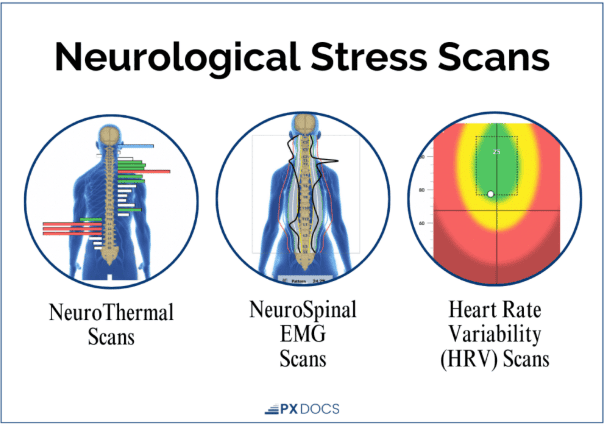
One of the most valuable parts of this process for parents is seeing objective data from the INSiGHT Neurological Scans.
Of the three scans we use, the EMG scan can be especially helpful when evaluating motor tics. It measures and graphs muscle tension patterns, including tension through the neck and shoulder regions.
Instead of simply being told that a child’s nervous system is “stressed,” parents can see measurable patterns that help guide the care plan.
Next Steps You Can Take
Parents deserve to understand all of their options when helping a child struggling with motor tics.
For Addison, we knew her major trigger was the chemical exposure from her school’s gym floor refinishing. But understanding the trigger was only part of the picture. We also needed to address the nervous system stress that remained afterward.
She received neurologically-focused chiropractic care multiple times per week to address the tension and dysfunction present through her neck and shoulders. Over roughly 12-18 months, she moved through her motor tics, sleep challenges, and anxiety and is now healthy and thriving.
Today, when stress or a growth spurt causes those old patterns to start showing up again, we know it’s time to pay closer attention to her nervous system and increase her chiropractic care as needed.
If your child is struggling with motor tics, you don’t have to simply watch and wait. Understanding what’s happening beneath the surface may be the first step toward finding a better path forward.
Not local to Inspire? Don’t worry! Visit the PX Docs Directory to find a qualified provider near you. https://pxdocs.com/px-docs/
Original Article: https://pxdocs.com/motor-milestones/motor-tics/
PX Docs has established sourcing guidelines and relies on relevant, and credible sources for the data, facts, and expert insights and analysis we reference. You can learn more about our mission, ethics, and how we cite sources in our editorial policy.