
Updated on Apr 30, 2026
Author: Dr. Morgan Reimer
Revised for Inspire Chiropractic by Davis Madole, Reviewed by Dr. Shah Khan DC, CACCP
School refusal is when a child has a persistent struggle attending or staying at school because of emotional distress, anxiety, or physical symptoms. It is different from truancy because the child is not simply choosing to avoid school.
Many children experiencing school refusal actually want to attend. Their nervous system is responding to the school environment as if it is unsafe, creating anxiety, panic, or physical symptoms that make showing up feel impossible.
Every parent knows the difference between “I don’t want to go” and “I can’t.”
When your child is crying at the door, complaining of stomach aches every Sunday night, or having panic attacks before school, you are seeing a nervous system in distress.
At Inspire Chiropractic, we look at school refusal differently. Instead of only asking, “How do we change the behavior?” we ask:
“Why is the nervous system responding this way?”
What Is the Difference Between School Refusal and Truancy?
School refusal and truancy may look similar because both involve missing school, but they come from completely different places.
Truancy is when a child intentionally skips school without significant emotional distress.
School refusal happens when anxiety, fear, or nervous system overwhelm makes attending school feel physically and emotionally impossible.
School refusal is not a diagnosis itself. It is a sign that something deeper may be affecting a child’s ability to regulate stress.
Understanding the difference helps parents support the root cause instead of only addressing the behavior.
What Are the Signs and Symptoms of School Refusal?
School refusal can show up through emotional, physical, and behavioral changes.
Common signs include:
- Stomach aches, headaches, nausea, or dizziness before school
- Crying, panic attacks, or intense emotional reactions
- Avoiding school or frequently visiting the nurse
- Trouble sleeping before school days
- Difficulty getting ready in the morning
- Increased worry about school
- Pulling away from friends or activities
These symptoms are not fake or attention-seeking.
When the nervous system is overwhelmed, the body responds physically. The brain and gut are closely connected through the vagus nerve, which helps explain why digestive symptoms are often one of the first signs parents notice.
What Causes School Refusal in Children?
School refusal can be connected to many things, including:
- Separation anxiety
- Social anxiety
- Academic pressure
- Bullying
- Major life changes
But these challenges do not affect every child the same way.
The difference often comes down to nervous system resilience.
A child with a well-regulated nervous system can experience stress and recover. A child whose nervous system is already overwhelmed may interpret normal situations as threats.
The Neurological Root Cause
The Autonomic Nervous System controls the body’s ability to respond to stress and return to calm.
Think of it like a car:
The Sympathetic Nervous System is the gas pedal. It activates the body for action, protection, and survival.
The Parasympathetic Nervous System is the brake pedal. It helps the body calm down, regulate, digest, sleep, and recover.
In many children with school refusal, the gas pedal has been pressed for too long.
Their nervous system becomes stuck in a state of heightened alert, making ordinary situations feel overwhelming.
This is not a character flaw.
It is nervous system function.
The “Perfect Storm” Behind School Refusal
At Inspire Chiropractic, we often discuss a pattern called the “Perfect Storm”–a combination of stressors that can overwhelm a developing nervous system.
This may include:
Prenatal Stress
A mother’s stress levels during pregnancy can influence the developing nervous system of her baby.
Birth Stress
Birth experiences such as prolonged labor, C-section, forceps, vacuum extraction, or other interventions can place stress on a baby’s developing nervous system.
Early Childhood Stressors
Illness, antibiotics, ear infections, poor sleep, sensory overload, and other environmental stressors can continue adding pressure over time.
Each stressor alone may not create a problem. But when multiple stressors build during important stages of development, the nervous system may struggle to adapt.
By the time school begins, the child may not have a behavior problem. They may have a nervous system that is overwhelmed and struggling to regulate.
How Does the Vagus Nerve Affect School Refusal?
The vagus nerve plays a major role in the parasympathetic nervous system, helping regulate:
- Heart rate
- Digestion
- Immune function
- Emotional regulation
- The body’s ability to calm down
When vagus nerve function is not working optimally, the nervous system may have difficulty recognizing when a situation is safe.
This can lead to a child experiencing:
- Anxiety instead of confidence
- Panic instead of calm
- Shutdown instead of engagement
Those Sunday night stomach aches, morning panic attacks, and difficulty sleeping are all examples of how nervous system stress can show up throughout the body.
How Does Neurologically-Focused Chiropractic Care Address School Refusal?
Neurologically-Focused Chiropractic Care focuses on improving nervous system regulation by addressing patterns of neurological stress and interference.
Using neurological assessments and gentle, specific adjustments, care is designed to support better communication between the brain and body and help the nervous system shift away from constant stress.
The goal is not to “cure” anxiety or school refusal.
The goal is to help the nervous system become more adaptable, regulated, and resilient.
Many families report improvements such as:
- Better sleep
- Improved digestion
- Fewer emotional reactions
- Greater ability to handle stress
- Increased confidence in challenging environments
How Are INSiGHT Scans Used to Find the Root Cause?
Before care begins, Inspire uses INSiGHT Scans to better understand how a child’s nervous system is functioning.
These scans measure:
Heart Rate Variability (HRV)
Measures balance between the sympathetic and parasympathetic nervous systems.
Surface Electromyography (sEMG)
Measures muscle tension patterns related to nervous system stress.
Thermal Scanning
Measures temperature patterns along the spine related to Autonomic Nervous System function.
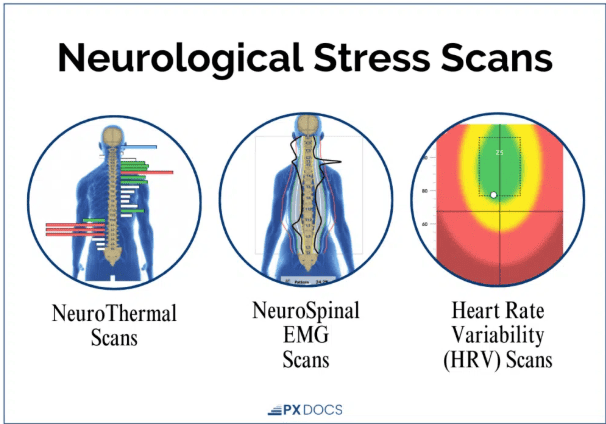
These scans help providers understand nervous system patterns and create more personalized care plans.
INSiGHT Scans do not diagnose medical conditions, and they are not a treatment or cure for school refusal or any other condition. They are assessment tools designed to measure nervous system function and track progress.
Addressing Subluxation and Restoring Nervous System Balance
When neurological interference is present, the nervous system may struggle to shift out of stress mode.
The body stays prepared for danger, even when the environment is safe.
Neurologically-Focused Chiropractic adjustments are designed to support areas of tension and interference that may affect brain-body communication.
As the nervous system begins regulating, families often notice changes in a natural progression:
- Sleep improves
- Digestion becomes more balanced
- Emotional regulation increases
- Social confidence and adaptability improve
What Can Parents Do About School Refusal?
Parents can support their child by addressing both the emotional experience and the nervous system underneath it.
Validate Their Experience
Your child’s distress is real.
Instead of assuming they are refusing because they are being difficult, recognize that their nervous system may be overwhelmed.
Track Patterns
Pay attention to:
- When symptoms began
- What makes them worse
- Sleep patterns
- Digestive concerns
- Sensory challenges
- Previous struggles with regulation
These patterns often reveal important connections.
Work With the School
Communication with teachers and counselors can help create additional support while addressing the underlying issue.
Avoid Punishment-Based Responses
When a child is in a stress response, punishment often adds more stress.
The goal is not removing expectations. The goal is pairing expectations with the support needed to help the nervous system regulate.
Explore Nervous System Function
If school refusal follows a history of sleep problems, sensory challenges, anxiety, digestive issues, or early childhood stress, there may be a deeper nervous system connection worth exploring.
Taking the Next Step
School refusal can leave families feeling helpless.
Parents often find themselves caught between wanting to support their child and feeling pressure to simply make them push through.
But school refusal is not a sign that your child is broken.
It is often a sign that their nervous system is overwhelmed.
The good news is that the nervous system can change. The first step is understanding what is happening beneath the surface.
By measuring nervous system function and addressing the root cause, families can create a path toward better regulation, resilience, and confidence.
To learn more about finding a trained Neurologically-Focused Chiropractor, connect with Inspire Chiropractic and learn how nervous system-focused care may support your family.
Frequently Asked Questions
Can school refusal go away on its own?
Sometimes school refusal improves with time and support, but persistent struggles often require addressing the underlying stress and nervous system patterns contributing to the problem.
Is school refusal the same as anxiety?
No. School refusal is a behavior pattern that can be connected to anxiety, but it may also involve nervous system dysregulation, sensory challenges, ADHD, or other stress-related factors.
At what age does school refusal usually begin?
School refusal often appears during major transitions, such as starting school or moving into middle school, when children experience increased emotional, social, and academic demands.
How long does it take to improve school refusal?
Every child is different. Progress depends on the child’s nervous system, history, environment, and support system.
Should I force my child to go to school?
Punishment and pressure often increase stress when a child is already overwhelmed. A more effective approach combines healthy expectations with support for the nervous system challenges driving the distress.
Request an appointment with us today to get started!
Not local to Inspire? Don’t worry! Visit the PX Docs Directory to find a qualified provider near you. https://pxdocs.com/px-docs/
Original Article: https://pxdocs.com/anxiety/school-refusal/
PX Docs has established sourcing guidelines and relies on relevant, and credible sources for the data, facts, and expert insights and analysis we reference. You can learn more about our mission, ethics, and how we cite sources in our editorial policy.
SOURCES
- Kawsar, S., Yilanli, M., & Marwaha, R. (2022, June 5). School refusal. In StatPearls [Internet]. StatPearls Publishing. https://www.ncbi.nlm.nih.gov/books/NBK534195/
- Kearney, C. A., Lemos, A., & Silverman, J. (2004). The functional assessment of school refusal behavior. The Behavior Analyst Today, 5(3), 275–283. https://files.eric.ed.gov/fulltext/EJ1072107.pdf
- Davis, E. P., & Sandman, C. A. (2010). The timing of prenatal exposure to maternal cortisol and psychosocial stress is associated with human infant cognitive development. Child Development, 81(1), 131–148. https://doi.org/10.1111/j.1467-8624.2009.01385.x
- UCSF Department of Psychiatry and Behavioral Sciences. (2017, November 27). Stress in pregnancy linked to changes in infant’s nervous system, less smiling, less resilience. https://psych.ucsf.edu/news/stress-pregnancy-linked-changes-infant%E2%80%99s-nervous-system-less-smiling-less-resilience
- Porges, S. W. (2025). Polyvagal theory: Current status, clinical applications, and future directions. Clinical Neuropsychiatry, 22(3), 169–184. https://doi.org/10.36131/cnfioritieditore20250301