
Updated on May 19, 2026
Author: Dr. Morgan Reimer
Revised for Inspire Chiropractic by Davis Madole, Reviewed by Dr. Shah Khan DC, CACCP
If you’ve removed gluten and dairy, added probiotics, tried supplements, and cleaned up your child’s diet, but they’re still struggling with digestion, sleep, behavior, or anxiety, you’re not alone.
Many families spend years focusing on the gut without realizing they may be missing the system that controls it all: the nervous system.
Most conversations focus on the “gut-brain axis.” At Inspire Chiropractic, we take a different perspective. The gut and brain communicate both ways, but the nervous system plays the leading role in directing digestion, immune function, regulation, and healing.
Understanding that connection can help explain why so many gut-focused approaches only provide temporary or incomplete results.
What Is the Brain-Gut Connection?
The brain-gut connection is the communication network between the brain, nervous system, and digestive tract.
This communication happens largely through the vagus nerve, which helps regulate:
- Digestion
- Gut motility
- Nutrient absorption
- Immune function
- Emotional regulation
While the gut does send information back to the brain, the nervous system is responsible for coordinating how the digestive system functions in the first place.
When a child is stuck in chronic stress or “fight-or-flight” mode, digestion is often one of the first systems affected.
The Role of the Vagus Nerve
The vagus nerve serves as the body’s primary “rest and digest” pathway.
It helps regulate four key digestive functions:
Motility
Moves food through the digestive tract. Poor vagus nerve function can contribute to constipation, reflux, and sluggish digestion.
Absorption
Helps the body properly absorb nutrients from food.
Assimilation
Directs nutrients where they’re needed throughout the body.
Elimination
Supports healthy bowel movements and waste removal.
The vagus nerve also influences neurotransmitters such as serotonin, which play a major role in mood, behavior, and emotional regulation.
Signs of a Disrupted Brain-Gut Connection
When the nervous system isn’t regulating properly, digestive symptoms often appear alongside behavioral and developmental challenges.
Common signs in babies and young children include:
- Colic
- Reflux
- Constipation
- Feeding difficulties
- Eczema
- Frequent ear infections
- Poor sleep
Older children may experience:
- Food sensitivities
- Chronic stomach aches
- Picky eating
- Anxiety
- Irritability
- Difficulty focusing
- Emotional meltdowns
These symptoms are often connected through the same underlying nervous system imbalance.
How the Brain-Gut Connection Impacts Immunity
Nearly 70-80% of the immune system resides within the gut.
The vagus nerve helps regulate inflammation by signaling the body when to turn inflammatory responses on and off.
When the nervous system becomes stuck in stress mode:
- Digestion slows
- Inflammation increases
- Immune function becomes less efficient
- Sleep quality declines
- Stress hormones remain elevated
Over time, this can contribute to chronic health challenges that seem unrelated but often share the same neurological foundation.
Why Diet Alone Isn’t Always Enough
Nutrition matters.
Reducing processed foods, supporting the microbiome, and improving dietary quality can be incredibly helpful.
But even the healthiest food can’t fully compensate for a nervous system that isn’t properly regulating digestion.
Think of it this way:
- Food is the fuel.
- The gut is the engine.
- The nervous system is the driver.
If the driver isn’t functioning properly, the engine can’t perform at its best.
This is why many families experience progress with gut-healing strategies but eventually hit a plateau.
What Causes the Brain-Gut Connection to Break Down?
At Inspire, we often see a combination of factors that create what we call the “Perfect Storm.”
Prenatal Stress
Stress during pregnancy can influence early nervous system development.
Birth Stress
Interventions such as forceps, vacuum extraction, induction, or C-sections may place additional strain on the upper neck and nervous system.
Early Childhood Stressors
Antibiotics, environmental toxins, chronic illness, poor sleep, and ongoing stress can further challenge nervous system regulation.
Over time, these stressors may contribute to patterns of dysregulation that affect digestion, immunity, behavior, and development.
Our Approach
Neurologically-Focused Chiropractic Care begins with INSiGHT Scans, which evaluate how the nervous system is functioning.
These scans include:
- Heart Rate Variability (HRV)
- Surface EMG
- NeuroThermal Scanning
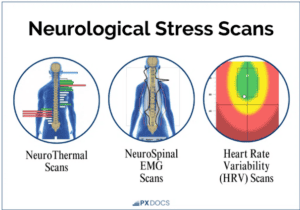
The scans do not diagnose conditions. Instead, they help identify patterns of nervous system stress and dysregulation.
Using this information, care can be customized to support better neurological function and regulation.
How Neurologically-Focused Chiropractic Care Supports the Brain-Gut Connection
The goal of care is to help restore communication between the brain and body by addressing areas of neurological interference.
Adjustments are gentle, specific, and designed to support nervous system function.
As regulation improves, families often report improvements in:
- Sleep
- Digestion
- Bowel regularity
- Food tolerance
- Emotional regulation
- Focus and attention
- Overall resilience
Many parents also notice that nutritional interventions, therapies, and other wellness strategies begin working more effectively once the nervous system is functioning better.
The Bottom Line
If you’ve spent months or years focusing on gut health without seeing the progress you hoped for, the missing piece may not be another supplement or elimination diet.
The nervous system coordinates every aspect of digestion, immunity, and regulation.
When the brain-gut connection is functioning well, the body is better able to absorb nutrients, regulate inflammation, recover from stress, and thrive.
Sometimes the next step isn’t doing more for the gut — it’s supporting the system that runs it.
Request an appointment with us today to get started!
Not local to Inspire? Don’t worry! Visit the PX Docs Directory to find a qualified provider near you. https://pxdocs.com/px-docs/
Original Article: https://pxdocs.com/gut-health/brain-gut-connection-in-children/
PX Docs has established sourcing guidelines and relies on relevant, and credible sources for the data, facts, and expert insights and analysis we reference. You can learn more about our mission, ethics, and how we cite sources in our editorial policy.
SOURCES
- Browning, K. N., & Travagli, R. A. (2014). Central nervous system control of gastrointestinal motility and secretion and modulation of gastrointestinal functions. Comprehensive Physiology, 4(4), 1339–1368. https://doi.org/10.1002/cphy.c130055
- Davis, E. P., & Sandman, C. A. (2010). The timing of prenatal exposure to maternal cortisol and psychosocial stress is associated with human infant cognitive development. Child Development, 81(1), 131–148. https://doi.org/10.1111/j.1467-8624.2009.01385.x
- Arakaki, X., Arechavala, R. J., Choy, E. H., Bautista, J., Bliss, B., Molloy, C., Wu, D.-A., Shimojo, S., Jiang, Y., Kleinman, M. T., & Kloner, R. A. (2023). The connection between heart rate variability (HRV), neurological health, and cognition: A literature review. Frontiers in Neuroscience, 17, 1055445. https://doi.org/10.3389/fnins.2023.1055445
- Hoeve, J. (2021). Clinical evidence of vestibular dysregulation in colicky babies before and after chiropractic treatment vs. non-colicky babies. Frontiers in Pediatrics, 9, 668457. https://doi.org/10.3389/fped.2021.668457
- Wiertsema, S. P., van Bergenhenegouwen, J., Garssen, J., & Knippels, L. M. J. (2021). The interplay between the gut microbiome and the immune system in the context of infectious diseases throughout life and the role of nutrition in optimizing treatment strategies. Nutrients, 13(3), 886. https://doi.org/10.3390/nu13030886
- Marano, G., Sfratta, G., Marzo, E. M., Cozzo, G., Abate, F., Traversi, G., Mazza, O., Capristo, E., Gaetani, E., & Mazza, M. (2025). The pediatric microbiota–gut–brain axis: Implications for neuropsychiatric development and intervention. Children, 12(11), 1561. https://doi.org/10.3390/children12111561
- Yang, H., Wang, A., Yang, J., Luo, R., & Yang, Y. (2025). Alterations in gut microbiota composition in neurodevelopmental disorders: A systematic review and meta-analysis. Frontiers in Microbiology, 16, 1650212. https://doi.org/10.3389/fmicb.2025.1650212
- UCLA Health. (2019, September 6). Study shows how serotonin and a popular anti-depressant affect the gut’s microbiota. https://www.uclahealth.org/news/release/study-shows-how-serotonin-and-a-popular-antidepressant-affect-the-guts-microbiota
- Physiopedia. (n.d.). Vagus nerve. Retrieved May 13, 2026, from https://www.physio-pedia.com/Vagus_Nerve
- ScienceDirect. (n.d.). Cholinergic anti-inflammatory pathway. ScienceDirect Topics: Immunology and Microbiology. Retrieved May 13, 2026, from https://www.sciencedirect.com/topics/immunology-and-microbiology/cholinergic-anti-inflammatory-pathway