
Updated on Jul 16, 2026
Author: Dr. Morgan Reimer
Revised for Inspire Chiropractic by Davis Madole, Reviewed by Dr. Shah Khan DC, CACCP
Today, more children than ever are receiving developmental and chronic health diagnoses. For many families, that diagnosis comes after months or years of searching for answers.
You know the journey:
The sleepless nights researching symptoms.
The specialist appointments.
The conflicting opinions.
The feeling that something is happening, but no one can explain why.
Then finally, you receive a diagnosis:
Autism. ADHD. Sensory Processing Disorder. Anxiety.
A diagnosis can bring relief because it validates what you have been experiencing. But it can also bring uncertainty.
A question many parents quietly ask is:
Will this diagnosis help my child, or will it limit them?
At Inspire Chiropractic, we have supported thousands of families through this exact moment. Diagnostic labels are not simply good or bad. They are tools.
They can open doors to important resources and support, but they can also become limiting when they become the way everyone sees your child.
Understanding Diagnostic Labels in Today’s World
Diagnostic labels are the medical system’s way of categorizing patterns of symptoms and behaviors into recognized conditions.
These labels can help identify challenges and connect families with support. However, they primarily describe what a child is experiencing–not necessarily why it is happening.
A diagnosis can explain the symptoms, but many parents are still left asking:
What caused this?
From our perspective, many childhood challenges are connected through one common system: the nervous system.
The developing nervous system can be influenced by many stressors, including prenatal stress, birth experiences, illness, environmental factors, and early childhood challenges.
This is what we refer to as the “Perfect Storm”–multiple stressors that can overwhelm a child’s ability to regulate and adapt.
A diagnosis can provide answers, but understanding nervous system function can provide another important piece of the puzzle.
The Good: When Diagnoses Help
There are real benefits to having a diagnosis. For many families, a diagnosis provides access to support they desperately need.
1. Access to Services
A diagnosis can help children receive important resources, including:
- IEP and 504 school accommodations
- Speech and occupational therapy
- Behavioral support
- Early intervention programs
- Specialized educational resources
Without a diagnosis, many children struggle to receive the support they need.
With the right resources, children can thrive while building new skills.
2. Insurance and Financial Support
Many healthcare and educational resources require a diagnosis before services can be approved.
A diagnosis may help families access:
- Therapy coverage
- Assistive technology
- Financial assistance programs
- Community resources
- Diagnosis-specific support organizations
For many families, these resources make a meaningful difference.
3. Validation for Families
One of the most powerful parts of receiving a diagnosis is validation.
Parents often spend years feeling misunderstood or blamed for their child’s struggles.
A diagnosis confirms something important:
Your child is not choosing to struggle.
Their challenges are real, and they deserve support.
4. Community and Connection
A diagnosis can connect families with others who understand their experience.
Support networks can provide:
- Helpful strategies
- Experienced parents
- Local resources
- Specialized providers
- Encouragement during difficult seasons
No family should have to navigate these challenges alone.
The Bad: Hidden Costs of Labels
While diagnoses can provide valuable support, there are also limitations parents should understand.
1. The Identity Shift to “Broken”
A diagnosis describes something a child experiences. It should never become who they are.
There is a difference between:
“My child has Autism.”
and:
“My child is a person who has unique strengths and is working through nervous system challenges.”
Children are more than their diagnosis.
They are creative, loving, curious, funny, and capable. A label should explain their challenges, not define their future.
2. Victim Mentality and Lower Expectations
Sometimes labels unintentionally create limits.
When children constantly hear what they cannot do because of a diagnosis, they may begin believing those limitations are permanent.
A child’s challenges today do not determine their potential tomorrow.
Children are constantly developing, adapting, and learning. A diagnosis should provide support, not remove hope.
3. The Medication Dependency Cycle
A diagnosis can sometimes lead to a pattern where symptoms are managed individually without addressing the bigger picture.
One issue leads to medication. Side effects create new challenges. New challenges lead to additional interventions.
The question often becomes:
Why is the body struggling in the first place?
Supporting the nervous system, digestion, immune function, and overall health can be an important part of understanding the whole child.
4. A Narrow Care Perspective
Once a diagnosis exists, providers may unintentionally focus only on that label.
One specialist focuses on digestion.
Another focuses on behavior.
Another focuses on attention.
But many of these challenges may share common roots within nervous system regulation.
Instead of only asking:
“What diagnosis does my child have?”
we should also ask:
“How is my child’s nervous system functioning?”
Our Perspective: Beyond Labels
At Inspire, we believe every child deserves to be seen as a whole person, not just a diagnosis.
The question we focus on is:
Why is the nervous system struggling to regulate?
Conditions like Autism, ADHD, anxiety, and sensory challenges can look different on the outside, but many children share common patterns of nervous system dysregulation.
When the nervous system is stuck in a state of stress, the body may struggle with:
- Emotional regulation
- Focus
- Sleep
- Digestion
- Sensory processing
- Adaptability
Understanding nervous system function helps us look deeper than the symptoms alone.
The “Perfect Storm” Creates Challenges, Not Limits
Many parents wonder why their child is struggling.
While genetics can play a role, there is often much more involved.
Stressors throughout pregnancy, birth, and childhood can influence how the nervous system develops and adapts.
These may include:
- Prenatal stress
- Birth interventions
- Illness
- Antibiotics
- Environmental stressors
- Overstimulation
These experiences can create a nervous system that is constantly working harder to stay balanced.
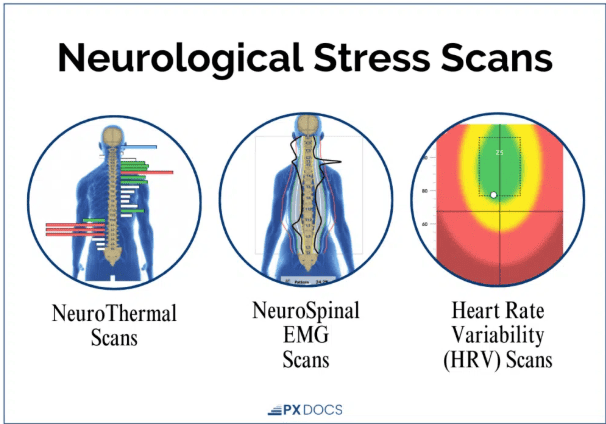
Through INSiGHT Scans and Neurologically-Focused Chiropractic Care, providers can evaluate nervous system function and create a plan focused on supporting regulation.
The goal is not to “cure” a diagnosis.
The goal is to help the nervous system function better.
Navigating Both Worlds Wisely
Parents do not have to choose between accepting support and believing in their child’s potential.
You can do both.
Use diagnoses as tools, not identities.
Access therapies and accommodations while continuing to support your child’s growth.
Focus on progress, not limitations.
The “both/and” approach means:
- Yes to getting support now and believing in future possibilities.
- Yes to understanding current challenges and supporting growth.
- Yes to using resources and looking deeper at nervous system function.
Your Child’s Story Isn’t Written Yet
A diagnosis can provide answers, but it does not determine your child’s future.
Your child is not their label.
They are a unique person with strengths, abilities, and unlimited potential for growth.
The nervous system is adaptable. Childhood is a time of incredible development and change.
When we support the whole child instead of only managing symptoms, we create more opportunities for growth.
The path forward:
- Find providers who see your whole child
- Use objective assessments like INSiGHT Scans to understand nervous system function
- Access the services your child needs
- Continue believing in what is possible
Your child needs support.
But they also need people who see beyond the label.
They need adults who recognize the person behind the diagnosis and believe in who they can become.
Request an appointment with us today to get started!
Not local to Inspire? Don’t worry! Visit the PX Docs Directory to find a qualified provider near you. https://pxdocs.com/px-docs/
Original Article: https://pxdocs.com/nervous-system/diagnosis-labels/
PX Docs has established sourcing guidelines and relies on relevant, and credible sources for the data, facts, and expert insights and analysis we reference. You can learn more about our mission, ethics, and how we cite sources in our editorial policy.
SOURCES
- American Academy of Pediatrics. (2019, September 6). Study: 1 in 6 children has developmental disability. AAP News. https://publications.aap.org/aapnews/news/13763/Study-1-in-6-children-has-developmental-disability
- American Psychiatric Association. (N.D.). Diagnostic and statistical manual of mental disorders (5th ed., text rev.). https://www.psychiatry.org/psychiatrists/practice/dsm
- Centers for Disease Control and Prevention. (2024). Learn the Signs. Act Early. https://www.cdc.gov/ncbddd/actearly/whyActEarly.html
- Centers for Disease Control and Prevention. (2024). Managing chronic health conditions in school settings. https://www.cdc.gov/school-health-conditions/chronic-conditions/index.html
- Hyman, S. L., Levy, S. E., Myers, S. M., & Council on Children with Disabilities, Section on Developmental and Behavioral Pediatrics. (2011). Identification, evaluation, and management of children with autism spectrum disorder. Pediatrics, 145(1), e20193447. https://pmc.ncbi.nlm.nih.gov/articles/PMC3108032/
- Liu, J., Chen, X., & Lewis, G. (2025). Childhood behavioral problems and academic outcomes: A longitudinal study from early childhood through adolescence. Brain Sciences, 14(7), 687. https://www.sciencedirect.com/science/article/pii/S2666379124006876
- Zito, J. M., Zhu, Y., & Safer, D. J. (2021). Psychotropic polypharmacy in the US pediatric population: A methodologic critique and commentary. Frontiers in Psychiatry, 12, Article 644741. https://www.frontiersin.org/journals/psychiatry/articles/10.3389/fpsyt.2021.644741/full