
Updated on May 18, 2026
Author: Dr. Morgan Reimer
Revised for Inspire Chiropractic by Davis Madole, Reviewed by Dr. Shah Khan DC, CACCP
If your child struggles with eczema, you’ve probably tried it all — steroid creams, special detergents, elimination diets, probiotics, and supplements. Maybe some things helped temporarily, but the flare-ups keep coming back.
If that’s your story, it’s important to understand something:
Eczema isn’t just a skin problem.
While the rash shows up on the skin, persistent eczema often reflects deeper challenges involving the gut, immune system, and nervous system. Understanding those connections can help explain why so many children continue to struggle despite doing all the “right” things.
What Is Eczema?
Eczema, also known as atopic dermatitis, is a chronic inflammatory skin condition that affects up to 25% of children. It commonly appears during infancy or early childhood and causes:
- Dry, itchy skin
- Red or irritated patches
- Rough or scaly areas
- Flare-ups that come and go
Although the skin is where symptoms appear, research increasingly points to a broader picture involving the gut-skin axis, immune function, and nervous system regulation.
Common Signs of Eczema
Children with eczema may experience:
- Persistent itching
- Dry, rough skin
- Red, brown, purple, or gray patches depending on skin tone
- Cracked or oozing skin during severe flares
- Sleep disruption from nighttime itching
- Frequent skin infections
- Seasonal flare-ups
- Food sensitivities
- Constipation or digestive issues
- Frequent ear infections
Many parents notice that eczema rarely occurs on its own. Other challenges often show up alongside it.
Why Does Eczema Happen?
Most explanations focus on three factors:
- Skin barrier dysfunction
- Immune system imbalance
- Changes in the microbiome
These factors absolutely matter, but they don’t fully explain why some children continue to struggle despite addressing all three.
At Inspire Chiropractic, we often see eczema as part of a larger pattern involving nervous system dysregulation.
The “Perfect Storm”
A child’s nervous system can be influenced by a combination of factors, including:
- Prenatal stress
- Birth interventions or birth stress
- Repeated illnesses
- Antibiotic exposure
- Feeding challenges
- Chronic environmental stressors
Over time, these stressors may affect how well the nervous system regulates digestion, immune function, and inflammation.
The Nervous System Connection
The Autonomic Nervous System controls many of the body’s automatic functions, including digestion, immune regulation, and recovery.
It has two primary branches:
- Sympathetic Nervous System (“fight or flight”)
- Parasympathetic Nervous System (“rest, digest, and regulate”)
When a child becomes stuck in a prolonged stress response, digestion and immune regulation can become less efficient.
The vagus nerve plays a key role in this process by helping regulate:
- Gut motility
- Nutrient absorption
- Elimination
- Inflammatory responses
When vagal function is reduced, children may experience constipation, digestive challenges, increased inflammation, and difficulty regulating immune responses.
This is one reason why many families see only partial improvement from creams, supplements, or dietary changes alone.
Why Does Eczema Keep Coming Back?
Many families work through three layers of healing:
Layer 1: Environmental Changes
- Fragrance-free products
- Cleaner household products
- Gentle skin care routines
Layer 2: Gut and Nutrition Support
- Dietary modifications
- Probiotics
- Nutritional supplementation
These steps are often helpful and important.
However, some children continue to flare despite significant effort in these areas.
Layer 3: Nervous System Regulation
The nervous system controls both digestion and immune function. If it remains stuck in a stress-dominant state, progress may plateau because the systems underneath are still struggling to regulate properly.
This is often why many families notice worsening during:
- Seasonal changes
- Illnesses
- Stressful periods
- Sleep disruptions
How Neurologically-Focused Chiropractic Care May Help
Neurologically-Focused Chiropractic Care takes a different approach by evaluating how the nervous system is functioning.
Using INSiGHT Scans, practitioners assess patterns related to:
- Nervous system stress
- Muscle tension
- Autonomic balance
- Adaptability and recovery
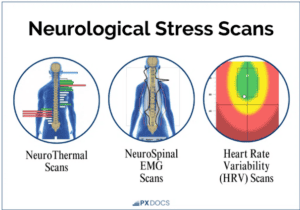
These scans do not diagnose or treat eczema. Instead, they help identify areas where the nervous system may be struggling to regulate efficiently.
Care is then designed to support nervous system function through gentle, specific adjustments appropriate for children.
As nervous system regulation improves, many families report improvements in areas such as:
- Sleep quality
- Digestion
- Emotional regulation
- Overall resilience
Often, these changes occur before skin improvements become noticeable.
The Bottom Line
Eczema is rarely just a skin issue.
For many children, it reflects a deeper connection between the nervous system, gut, and immune system. While skin care, nutrition, and environmental changes remain important, they may not fully address the underlying factors contributing to recurring flare-ups.
If your child’s eczema continues despite doing everything you’ve been told to do, it may be worth exploring how their nervous system is functioning.
Sometimes the missing piece isn’t another cream or another dietary restriction.
It’s looking one layer deeper.
Request an appointment with us today to get started!
Not local to Inspire? Don’t worry! Visit the PX Docs Directory to find a qualified provider near you. https://pxdocs.com/px-docs/
Original Article: https://pxdocs.com/gut-health/what-causes-eczema-in-children/
PX Docs has established sourcing guidelines and relies on relevant, and credible sources for the data, facts, and expert insights and analysis we reference. You can learn more about our mission, ethics, and how we cite sources in our editorial policy.
SOURCES
- Schoch, J. J., Anderson, K. R., Jones, A. E., Tollefson, M. M., & Section on Dermatology. (2025). Atopic dermatitis: Update on skin-directed management: Clinical report. Pediatrics, 155(6), e2025071812. https://doi.org/10.1542/peds.2025-071812
- Lee, S.-Y., Lee, E., Park, Y. M., & Hong, S.-J. (2018). Microbiome in the gut-skin axis in atopic dermatitis. Allergy, Asthma & Immunology Research, 10(4), 354–362. https://doi.org/10.4168/aair.2018.10.4.354
- Kim, J., Kim, B. E., Ahn, K., & Leung, D. Y. M. (2019). Interactions between atopic dermatitis and Staphylococcus aureus infection: Clinical implications. Allergy, Asthma & Immunology Research, 11(5), 593–603. https://doi.org/10.4168/aair.2019.11.5.593
- Simon, T., Kirk, J., Dolezalova, N., Guyot, M., Panzolini, C., Bondue, A., Lavergne, J., Hugues, S., Hypolite, N., Saeb-Parsy, K., Perkins, J., Macia, E., Sridhar, A., Vervoordeldonk, M. J., Glaichenhaus, N., Donegá, M., & Blancou, P. (2023). The cholinergic anti-inflammatory pathway inhibits inflammation without lymphocyte relay. Frontiers in Neuroscience, 17, 1125492. https://doi.org/10.3389/fnins.2023.1125492
- Pala, V., Rosset, F., Mastorino, L., Sciamarrelli, N., Boskovic, S., Borriello, S., Bongiovanni, E., Crespi, O., Ribero, S., & Quaglino, P. (2025). The central role of Th2 immune response in inflammatory dermatoses: From pathogenesis to targeted therapies. International Journal of Molecular Sciences, 26(21), 10720. https://doi.org/10.3390/ijms262110720
- Boston Children’s Hospital. (n.d.). Eczema (atopic dermatitis). Retrieved May 13, 2026, from https://www.childrenshospital.org/conditions-treatments/eczema