
Updated on Mar 2, 2026
Author: Dr. Tony Ebel, DC, CPPFC, CCWP
Revised for Inspire Chiropractic by Davis Madole, Reviewed by Dr. Shah Khan DC, CACCP
For many families, it starts small — a few ear infections, constant colds, lingering inflammation, or digestive struggles. But over time, those “normal childhood illnesses” can grow into something much bigger: chronic health challenges and autoimmune conditions.
Parents are often told their child will “grow out of it.” Yet deep down, many know something still isn’t right.
Today, more children than ever are struggling with chronic inflammation, immune dysregulation, and autoimmune conditions. Genetics alone can’t explain the rise. While factors like toxins, stress, nutrition, and environmental triggers all matter, there’s another critical piece that often gets overlooked:
The nervous system — especially the vagus nerve.
The vagus nerve plays a major role in regulating inflammation and helping the immune system know when to calm down. When it’s not functioning properly, the body can get stuck in a constant inflammatory state.
At Inspire, we often see this tied back to what we call the “Perfect Storm” — prenatal stress, birth trauma, developmental stress, and chronic nervous system dysregulation that begin early in life.
In this article, we’ll explore how the vagus nerve affects the immune system, why dysfunction can contribute to chronic inflammation, and how Neurologically-Focused Chiropractic Care may help support better regulation and healing from the inside out.
What Is the Vagus Nerve?
The vagus nerve is the longest cranial nerve in the body. It connects the brain to major systems throughout the body, including the heart, lungs, digestive tract, and immune system.
It’s also one of the main parts of the Parasympathetic Nervous System — the body’s “brake pedal.”
While the Sympathetic Nervous System controls fight-or-flight responses, the vagus nerve helps the body rest, digest, recover, heal, and regulate inflammation.
It plays a role in:
- Digestion
- Breathing
- Heart rate
- Emotional regulation
- Immune system function
- Stress recovery
The vagus nerve exits through the brainstem and upper neck, which is why physical stress or tension in this area can affect how well it functions.
When vagal function is reduced, the body may struggle to regulate stress and inflammation properly. This is often connected to nervous system dysregulation and dysautonomia — patterns we commonly see in children with chronic health challenges.
The Cholinergic Anti-Inflammatory Pathway
Researchers discovered that the vagus nerve directly communicates with the immune system through what’s called the cholinergic anti-inflammatory pathway.
Here’s the simple version:
When inflammation rises in the body, the vagus nerve sends signals to the brain. The brain then signals back through the vagus nerve to release acetylcholine, a neurotransmitter that tells immune cells to calm down.
This helps reduce inflammatory chemicals like TNF and IL-6 and prevents inflammation from staying stuck “on.”
In other words, the vagus nerve acts like the body’s natural inflammation control system.
But this system only works well when the vagus nerve itself is functioning properly.
Why Proper Vagus Nerve Function Matters
When vagal signaling becomes disrupted, the body can lose its ability to regulate inflammation efficiently.
Instead of turning inflammation on when needed and back off afterward, the immune system may stay activated for too long.
This can contribute to patterns such as:
- Recurrent infections
- Allergies and eczema
- Digestive issues
- Chronic inflammation
- Autoimmune conditions
- PANS/PANDAS patterns
At the same time, the nervous system may stay stuck in fight-or-flight mode, creating a cycle of stress, inflammation, and immune dysregulation.
How Vagus Nerve Dysfunction Can Affect the Immune System
When the “brake pedal” of the nervous system isn’t working well, inflammatory chemicals can continue circulating without proper regulation.
Over time, chronic inflammation can place stress on tissues, organs, and immune function.
Many children we see follow a similar pattern:
- Colic or reflux as infants
- Sleep struggles and sensory challenges
- Frequent ear infections or antibiotics
- Allergies, asthma, eczema, or digestive issues
- Later immune dysregulation or autoimmune markers
Conventional care often addresses these as separate conditions. But from a neurological perspective, they may all connect back to underlying nervous system stress and vagus nerve dysfunction.
The “Perfect Storm” Behind Vagus Nerve Dysfunction
At Inspire, we often describe this pattern as the “Perfect Storm.”
Rather than one single event, it’s usually a buildup of stressors affecting the developing nervous system early in life.
These can include:
Prenatal Stress
Stress hormones during pregnancy can influence fetal nervous system development and stress regulation.
Birth Trauma
Even routine births can place significant physical stress on an infant’s head, neck, and brainstem. Since the vagus nerve exits through this region, tension or subluxation here may impact early nervous system function.
Early Childhood Stressors
Digestive issues, chronic stress, sleep struggles, repeated illness, and frequent antibiotics can further dysregulate the nervous system and gut-brain connection.
Over time, the child’s nervous system may become stuck in sympathetic dominance, where stress responses stay activated and healing responses become suppressed.
Vagus Nerve Stimulation Research
Research on vagus nerve stimulation (VNS) has grown significantly in recent years, especially for autoimmune and inflammatory conditions.
Studies have shown that stimulating the vagus nerve may help reduce inflammatory markers and improve regulation in conditions like:
- Rheumatoid arthritis
- Crohn’s disease
- Lupus
Some approaches use implanted devices, while others use non-invasive stimulation through the ear or neck.
The growing interest in VNS highlights something important:
The nervous system plays a major role in immune regulation.
The Research Behind Chiropractic & Immune Support
Emerging research also suggests that improving nervous system function may positively influence stress regulation, inflammation, and neuroimmune communication.
One study following adults receiving chiropractic care measured biomarkers related to stress and inflammation, including:
- Cortisol
- TNF-α
- IL-6
- BDNF (a marker related to brain adaptability)
Researchers observed improvements in stress regulation and reductions in inflammatory markers over time.
This doesn’t mean chiropractic care “treats” autoimmune disease. But it does reinforce the connection between nervous system regulation and immune system function.
Why This Matters for Families
Autoimmune challenges are not simply immune system problems.
They are often neuro-immune regulation problems.
The brain and immune system constantly communicate through pathways like the vagus nerve and autonomic nervous system. When that communication becomes disrupted, the body may struggle to regulate inflammation and stress effectively.
The goal is not to “boost” or suppress the immune system.
The goal is better regulation.
A well-regulated nervous system helps the body:
- Adapt to stress
- Recover more efficiently
- Regulate inflammation appropriately
- Support healing and resilience
Natural Ways to Support Vagal Tone
There are several ways families can naturally support vagal function and nervous system regulation:
- Deep breathing exercises
- Quality sleep
- Stress reduction
- Positive social connection
- Anti-inflammatory nutrition
- Cold exposure like splashing cold water on the face
These strategies can support overall nervous system health, though they may not fully address deeper structural or neurological stress patterns on their own.
Neurologically-Focused Chiropractic Care & Vagal Function
Neurologically-Focused Chiropractic Care aims to improve communication between the brain and body by addressing areas of stress and tension within the neurospinal system.
Because the vagus nerve travels through the upper neck and brainstem region, stress and dysfunction in these areas may affect nervous system regulation.
Specific chiropractic adjustments are designed to help:
- Reduce nervous system stress
- Improve adaptability
- Support parasympathetic function
- Restore healthier brain-body communication
Rather than artificially stimulating the vagus nerve, the goal is to help the body function more naturally and efficiently.
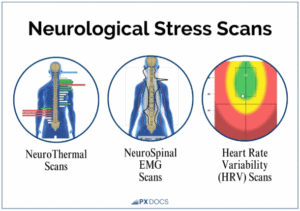
Measuring Nervous System Stress
INSiGHT Scans are used to evaluate patterns of nervous system stress and dysregulation.
These scans help identify areas where the nervous system may be stuck in stress responses or struggling with proper regulation.
Children with chronic immune and inflammatory challenges often show signs of:
- Sympathetic dominance
- Tension patterns in the upper neck and brainstem
- Reduced adaptability and exhaustion within the nervous system
Tracking these changes helps families objectively monitor progress over time.
Restoring Function from the Inside Out
The connection between the vagus nerve, nervous system regulation, and immune health is becoming increasingly recognized in neuroscience research.
While many approaches focus only on symptoms, medications, supplements, or diet changes, nervous system regulation is often a missing piece of the puzzle.
We believe healing starts by improving communication between the brain and body.
When the nervous system becomes more regulated, the body is often better able to:
- Handle stress
- Regulate inflammation
- Recover from illness
- Support immune balance
- Heal and function more effectively
If your child struggles with chronic inflammation, recurrent illness, autoimmune challenges, or nervous system dysregulation, it may be time to look deeper at how their nervous system is functioning.
Because lasting change starts at the root.
Request an appointment with us today to get started!
Not local to Inspire? Don’t worry! Visit the PX Docs Directory to find a qualified provider near you. https://pxdocs.com/px-docs/
Original Article: https://pxdocs.com/dysautonomia/what-is-dysautonomia/
PX Docs has established sourcing guidelines and relies on relevant, and credible sources for the data, facts, and expert insights and analysis we reference. You can learn more about our mission, ethics, and how we cite sources in our editorial policy.
SOURCES
- Patel, R. S., Bachu, R., Adikey, A., Malik, M., & Shah, M. (2020). Factors related to physician burnout and its consequences: A review. Behavioral Sciences, 10(6), 98. https://doi.org/10.3390/bs10060098
- Sudharsanan, N., Geldsetzer, P., Oh, J., & Vollmer, S. (2015). The effect of health insurance on mortality: A review. Health Services Research, 50(4), 1092-1109. https://doi.org/10.1111/1475-6773.12269
- Parsons, S. D., Weetman, D., Kamai, R., et al. (2020). Adverse impact of methadone on QTc interval in opioid-dependent patients. Journal of Clinical Medicine, 9(1), 180. https://doi.org/10.3390/jcm9010180
- Monje, M., & Iwasaki, A. (2022). Neuroimmune interactions in health and disease. Biological Psychiatry. https://doi.org/10.1016/j.biopsych.2022.11.005
- Xu, J., He, J., & Shen, J. (2020). COVID-19 and diabetes: A comprehensive review. Frontiers in Endocrinology, 11, 180. https://doi.org/10.3389/fendo.2020.00180
- Adams, R. D., Victor, M., & Ropper, A. H. (1997). Disorders of neuromuscular transmission. In Principles of Neurology (6th ed.). McGraw-Hill. https://www.ncbi.nlm.nih.gov/books/NBK1180/
- Johnson, K. S., Rabinstein, A. A., & Smischney, N. J. (2022). Clinical characteristics and outcomes of Guillain-Barré syndrome during the COVID-19 pandemic. Journal of Clinical Medicine, 11(10), 280. https://doi.org/10.3390/jcm1110280
- Lazarus, A., & Clarke, P. J. (2019). The role of epigenetics in schizophrenia: A comprehensive review. British Medical Bulletin, 128(1), 61-84. https://doi.org/10.1093/bmb/ldy049
- American Academy of Child and Adolescent Psychiatry (AACAP). (2018). PANS and PANDAS: Sudden onset of OCD symptoms. Facts for Families Guide. https://www.aacap.org/AACAP/Families_and_Youth/Facts_for_Families/FFF-Guide/PANS_and_PANDAS-Sudden_Onset_of_OCD_Symptoms-123.aspx
- McNally, R. J., & Heeren, A. (2017). Anxiety disorders in children: Diagnosis and management. National Institute of Mental Health (NIMH). https://www.ncbi.nlm.nih.gov/books/NBK448097/
- Bar-Aluma, B. E. (2021). Familial dysautonomia. In M. P. Adam, S. Bick, G. M. Mirzaa, et al. (Eds.), GeneReviews®. National Center for Biotechnology Information; University of Washington, Seattle. https://www.ncbi.nlm.nih.gov/books/NBK1180/
- Bouvette, C. M., et al. (1996). Role of physical countermaneuvers in the management of orthostatic hypotension: Efficacy and biofeedback augmentation. Mayo Clinic Proceedings, 71(9), 847–853. https://doi.org/10.4065/71.9.847
- The Dysautonomia Project. (2023). Dysautonomia: Causes, symptoms and treatments. https://thedysautonomiaproject.org/dysautonomia/
- The Dysautonomia Project. (2013). Mast cell activation simplified. https://thedysautonomiaproject.org/mast-cell-activation-simplified/
- The Dysautonomia Project. (2015). POTS and depression: An invisible illness affects the body and the mind. https://thedysautonomiaproject.org/pots-and-depression-an-invisible-illness-affects-the-body-and-the-mind/
- The Ehlers-Danlos Society. (2017). Cardiovascular autonomic dysfunction in Ehlers-Danlos syndrome–hypermobile type. https://www.ehlers-danlos.com/2017-eds-classification-non-experts/cardiovascular-autonomic-dysfunction-ehlers-danlos-syndrome-hypermobile-type/
- Mayo Clinic. (2023). Chiari malformation: Symptoms and causes. https://www.mayoclinic.org/diseases-conditions/chiari-malformation/symptoms-causes/syc-20354010
- National Institute of Neurological Disorders and Stroke. (n.d.). Postural tachycardia syndrome (POTS). https://www.ninds.nih.gov/health-information/disorders/postural-tachycardia-syndrome-pots
- Savat, S. (2024). High stress during pregnancy linked to elevated cortisol in toddlers’ hair, study finds. The Source – WashU. https://source.washu.edu/2024/07/high-stress-during-pregnancy-linked-to-elevated-cortisol-in-toddlers-hair-study-finds/