
Updated on March 3, 2025
Author: Dr. Tony Ebel, DC, CPPFC, CCWP
Revised for Inspire Chiropractic by Davis Madole, Reviewed by Dr. Shah Khan DC, CACCP
As a parent, watching your teen or young adult struggle with unexplained dizziness, fatigue, rapid heartbeat, fainting, and constant anxiety can be terrifying. Every time they stand up or change positions, you may find yourself wondering if they’ll feel faint or need to sit back down.
POTS can significantly interfere with everyday life, with symptoms often flaring during changes in temperature, position, or stressful situations — exactly when the nervous system needs to stay regulated and adaptable.
You may have been told that doctors still don’t fully understand what causes POTS (Postural Orthostatic Tachycardia Syndrome), and that management mainly involves things like increasing salt and fluids or changing how quickly you move between positions.
But there’s another important piece to consider: the nervous system.
POTS involves dysfunction of the Autonomic Nervous System (ANS), which regulates heart rate, blood pressure, digestion, temperature, and many other automatic functions. When the nervous system struggles to regulate these functions, a state of dysautonomia can develop.
POTS affects an estimated 1 to 3 million Americans, primarily women, and research has also found cases developing after COVID-19 in previously healthy individuals.
So what is really happening inside the body? And could addressing nervous system function help support someone struggling with POTS?
Let’s take a closer look.
What is POTS?
Postural Orthostatic Tachycardia Syndrome (POTS) is a disorder of the Autonomic Nervous System characterized by an abnormal increase in heart rate when standing.
To meet common diagnostic criteria, a person experiences a heart rate increase of at least 30 beats per minute within 10 minutes of standing, without a significant drop in blood pressure.
But POTS is about much more than a fast heartbeat. Symptoms can vary widely and may include:
- Dizziness or lightheadedness when standing
- Fatigue and weakness
- Brain fog and difficulty concentrating
- Headaches
- Heart palpitations
- Tremors or shaking
- Shortness of breath
- Chest pain
- Nausea and digestive problems
- Blurred or tunnel vision
- Sleep disturbances
For some people, symptoms are occasional and manageable. For others, POTS can make everyday activities like bathing, eating, standing, attending school, or participating in social activities extremely difficult.
The emotional impact can be significant, too. Many people with POTS experience anxiety, depression, or hopelessness because their condition limits what they can do and how they live their lives.
Subtypes of POTS Syndrome
POTS remains a poorly understood and frequently misdiagnosed condition. Many patients spend years looking for answers or are told their symptoms are simply anxiety or a lack of fitness.
There are several recognized subtypes of POTS.
Neuropathic POTS
Neuropathic POTS is associated with dysfunction of the autonomic nerves responsible for regulating blood flow, heart rate, and blood vessel constriction.
The vagus nerve is an important part of this system. It helps regulate heart rate, digestion, blood pressure, and communication between the brain and body.
When autonomic regulation is impaired, dysautonomia can develop, contributing to symptoms such as rapid heart rate, dizziness, blood pressure changes, digestive problems, temperature regulation issues, sleep disturbances, and emotional dysregulation.
Hyperadrenergic POTS
Hyperadrenergic POTS is commonly associated with elevated levels of norepinephrine, a hormone involved in the body’s stress response. Symptoms may include increased heart rate, palpitations, anxiety, and elevated blood pressure.
Other POTS subtypes include:
- Hypovolemic POTS: Associated with reduced blood volume, which can contribute to fainting, rapid heart rate, and difficulty concentrating.
- Secondary POTS: Develops alongside another underlying condition, such as Ehlers-Danlos syndrome or an autoimmune condition.
What Causes POTS?
To understand POTS, it helps to understand the Autonomic Nervous System.
The ANS automatically regulates functions such as heart rate, blood pressure, digestion, and temperature.
It has two major branches:
- Sympathetic Nervous System (SNS): The body’s “fight or flight” system. It increases heart rate and prepares the body to respond to stress.
- Parasympathetic Nervous System (PNS): The “rest and regulate” system. It helps slow the heart, support digestion, and promote recovery.
In a healthy nervous system, these two branches constantly work together to maintain balance.
When you stand up, for example, your nervous system automatically adjusts circulation and heart rate to help maintain adequate blood flow to your brain.
With POTS, that regulation doesn’t happen efficiently. The heart rate can rise excessively, blood flow may not be properly regulated, and symptoms like dizziness, fatigue, and brain fog can follow.
One important part of this system is the vagus nerve, which travels from the brainstem through the neck and into the abdomen. It plays an important role in regulating heart rate, digestion, inflammation, and other functions.
When the nervous system is chronically overactivated or poorly regulated, the body can struggle to shift effectively out of its “fight or flight” state.
The “Perfect Storm” of Dysautonomia and Vagus Nerve Dysfunction
At Inspire Chiropractic, we look at POTS through the lens of nervous system regulation and what we call the “Perfect Storm” — the accumulation of physical, chemical, and emotional stressors that can overwhelm a developing nervous system.
The vagus nerve is a major part of the parasympathetic system, helping the body transition toward rest, digestion, and recovery. When its function is impaired, autonomic regulation can become more difficult.
Potential contributors to nervous system dysfunction may include:
- Birth trauma and interventions: Physical stress associated with forceps, vacuum extraction, C-section, or other interventions may affect the developing neurospinal system.
- Viruses and infections: Illnesses such as mononucleosis, Lyme disease, and COVID-19 have been associated with autonomic dysfunction.
- Autoimmune conditions: Conditions such as Ehlers-Danlos syndrome and Mast Cell Activation Syndrome can occur alongside dysautonomia.
- Prolonged stress and trauma: Chronic stress can keep the sympathetic nervous system activated and make it harder for the body to regulate.
- Poor posture and prolonged screen use: Persistent tension through the neck and upper spine may contribute to altered nervous system function.
When the nervous system remains stuck in a state of sympathetic overactivation, the body’s ability to rest, digest, recover, and regulate can become compromised.
This understanding of nervous system dysfunction and dysautonomia is central to Our Approach to POTS.
Our Approach to POTS
At Inspire Chiropractic, our approach is different from simply focusing on symptom management. We look at nervous system function and aim to identify areas of dysregulation that may be contributing to the challenges someone is experiencing.
One of the tools we use is INSiGHT scanning technology. These scans allow us to objectively measure aspects of nervous system function and identify patterns of stress or dysfunction. Re-scanning over time can also help track changes and guide an individualized care plan.
Alongside neurologically-focused chiropractic care, we encourage healthy foundations that support nervous system regulation, including appropriate hydration and electrolytes, physical activity, postural stability, quality sleep, and a nutrient-dense diet.
A Real Success Story
Our patient Tommi went from being an extremely active high school student to struggling with basic daily activities after developing POTS.
Her mom described severe fatigue, migraines, brain fog, dizziness, rapid heart rate, low blood pressure, nausea, chest and neck pain, temperature regulation problems, insomnia, anxiety, and depression.
Her brain fog was particularly concerning. She had previously been an A-B student but suddenly struggled with basic schoolwork and decision-making.
Her INSiGHT scans revealed significant patterns of tension and autonomic dysfunction through her cervical and upper thoracic regions, along with signs of overall nervous system fatigue.
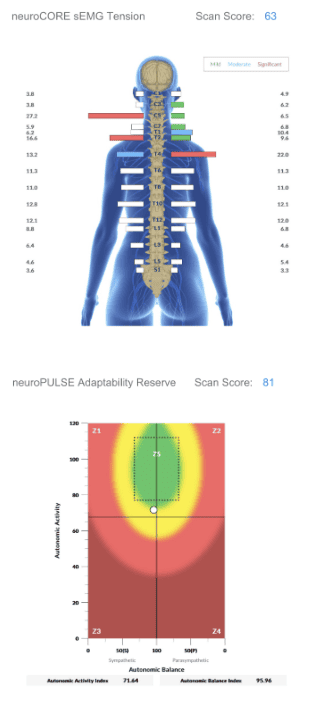
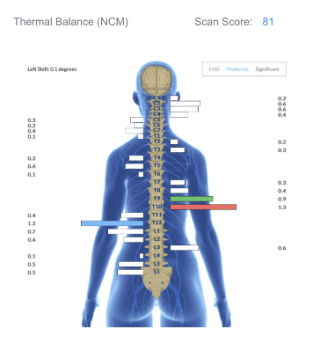
After beginning an intensive program of neurologically-focused chiropractic care and continuing care with her local Inspire chiropractor, Tommi experienced significant improvements in energy, stability, sleep, posture, and overall function.
She eventually returned to school, horseback riding, and the active lifestyle she loved — and went on to college with a scholarship.
Charting a Path to Healing
Living with POTS can feel unpredictable. One day you may feel relatively normal, and the next, even standing up can trigger dizziness, fatigue, or a racing heart.
But a diagnosis does not have to define your future.
Understanding the role of the Autonomic Nervous System and dysautonomia can provide an important perspective when searching for answers. At Inspire Chiropractic, we use neurologically-focused care and objective INSiGHT scans to better understand nervous system function and help guide care.
If you or your child is struggling with POTS, working with a qualified healthcare professional is important. Medical evaluation and appropriate management remain essential, especially when symptoms include fainting, chest pain, or significant changes in heart rate or blood pressure.
To learn more about neurologically-focused chiropractic care and find a qualified Inspire provider, explore our resources and connect with a practitioner who can help you build an individualized care plan.
Remember: you are more than a diagnosis. With the right support, education, and care team, there is always room for hope and progress.
Not local to Inspire? Don’t worry! Visit the PX Docs Directory to find a qualified provider near you. https://pxdocs.com/px-docs/
Original Article: https://pxdocs.com/pots/what-is-pots-syndrome/
PX Docs has established sourcing guidelines and relies on relevant, and credible sources for the data, facts, and expert insights and analysis we reference. You can learn more about our mission, ethics, and how we cite sources in our editorial policy.
SOURCES
- Johns Hopkins Medicine. (n.d.). Postural orthostatic tachycardia syndrome (POTS). Retrieved March 3, 2025, from https://www.hopkinsmedicine.org/health/conditions-and-diseases/postural-orthostatic-tachycardia-syndrome-pots
- Shen, W. K., Sheldon, R. S., Grubb, B. P., Raj, S. R., Calkins, H., Brignole, M., … & Sandroni, P. (2022). 2022 ACC/AHA/HRS guideline for the evaluation and management of postural tachycardia syndrome. Journal of the American College of Cardiology, 79(23), e118-e137. https://pmc.ncbi.nlm.nih.gov/articles/PMC9186518/
- Dysautonomia International. (n.d.). Dysautonomia: A common but underrecognized disorder. Retrieved March 3, 2025, from https://www.dysautonomiainternational.org/page.php
- Raj, S. R., Bourne, K. M., Stiles, L. E., Miglis, M. G., Cortez, M. M., Ashcroft, F., … & Kaufmann, H. (2020). Postural tachycardia syndrome: Mechanisms, diagnosis, and management. Heart Rhythm, 17(9), 1576–1584. https://pmc.ncbi.nlm.nih.gov/articles/PMC7046364/