
Updated on Jan 16, 2026
Author: Dr. Tony Ebel, DC, CPPFC, CCWP
Revised for Inspire Chiropractic by Davis Madole, Reviewed by Dr. Shaheryar Khan DC, CACCP
Sensory overload happens when a child’s nervous system becomes overwhelmed by sensory input from their environment. While adults can experience this too, it most often affects children.
When sensory input becomes “too much,” children may struggle to cope, leading to frustration, anxiety, tantrums, and emotional meltdowns. These reactions are not behavioral choices—they are signs that the nervous system is overloaded.
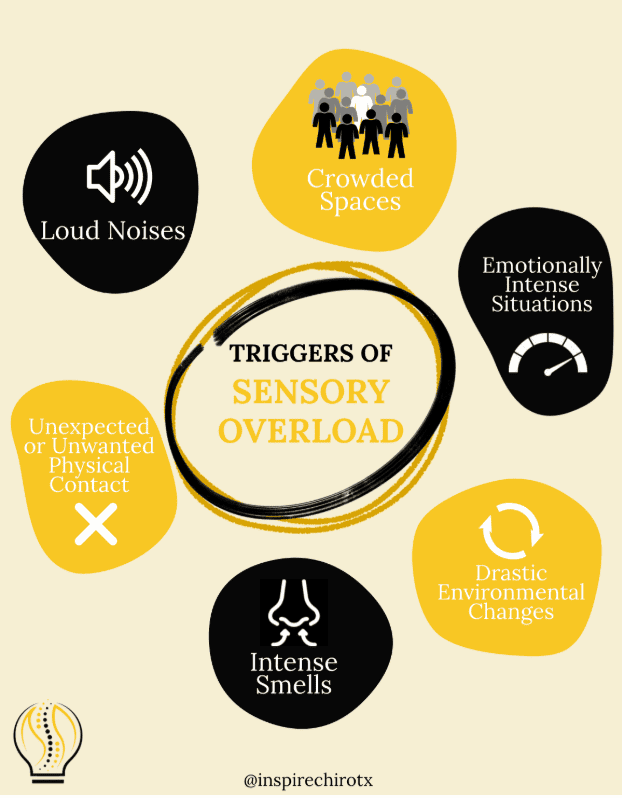
Common triggers include:
- Loud or unexpected noises
- Crowded or busy environments
- Strong emotions or stressful situations
- Sudden changes in routine or surroundings
- Unexpected physical touch
- Strong or unpleasant smells
What are the Symptoms of Sensory Overload?
Sensory overload can look different for every child, but common signs include:
- Discomfort or a strong desire to escape a situation
- Crying, tantrums, or emotional meltdowns
- Anxiety or heightened fear responses
- Irritability or agitation
- Difficulty focusing or following directions
Many children will also cover their ears or eyes, avoid touch, or shut down in loud or busy environments.
Over time, unresolved sensory overload can interfere with development. When a child’s brain is constantly working to manage overwhelming input, it can miss important opportunities for learning motor skills, speech, emotional regulation, and coordination.
Causes of Sensory Overload
Sensory overload occurs when the brain has difficulty organizing and filtering sensory information from the body and environment.
It is often the most visible symptom of Sensory Processing Disorder (SPD), and it commonly appears alongside conditions such as Autism, ADHD, and anxiety.
To understand the root cause, it helps to know the nervous system’s primary roles:
- Receive information from inside and outside the body
- Filter and organize that information
- Create appropriate responses throughout the body
As Dr. Bruce Lipton explains:
“The function of the nervous system is to perceive the environment and coordinate the behavior of all cells in the body.”
When a child has sensory overload, the nervous system lets in too much information that should normally be filtered out, overwhelming the brain.
The Role of Subluxation and Dysautonomia
Two important concepts help explain sensory overload: subluxation and dysautonomia.
Subluxation refers to tension and dysfunction within the nervous system that interferes with how sensory information is processed. When this happens, the nervous system often becomes stuck in a heightened “fight-or-flight” state.
This imbalance—called dysautonomia—means the calming, regulating side of the nervous system (the parasympathetic system) is underactive. As a result, children struggle to self-regulate, calm down, and adapt to sensory input.
The vagus nerve, which plays a key role in calming the body, is especially important here. Birth stress or trauma—particularly with interventions like C-sections, forceps, or vacuum delivery—can affect vagal function and is commonly seen in children with sensory challenges.
How to Cope with and Manage Sensory Overload
Traditional approaches often focus on avoiding triggers. While helpful short-term, this does not address the underlying nervous system imbalance.
Our approach focuses on restoring balance by:
- Supporting regulation of the Autonomic Nervous System
- Reducing chronic fight-or-flight stress
- Activating the calming parasympathetic system and vagus nerve
- Using Neurologically-Focused Pediatric Chiropractic Care
- Taking a detailed history of pregnancy, birth, and early stressors
- Utilizing advanced INSiGHT Scans to guide care
This drug-free approach is designed to help children tolerate sensory input more easily—without constant avoidance.
Sensory Overload Test
One of the most helpful tools for children with sensory overload is the NeuroSpinal EMG Scan, which measures stress and tension in the nervous system.
When excessive stress signals (called nociception) overwhelm the brain, we often refer to this as a “noisy brain.” Instead of calming, organizing input, the brain receives too much disruptive information.
On the other hand, proprioception—input from movement and body awareness—helps organize and calm the brain. Healthy nervous system function allows proprioceptive input to balance out stress signals.
When subluxation interferes with this balance, sensory overload increases. EMG scans help us identify where this imbalance exists so care can be precisely tailored.
From Sensory Overload Struggles to an Easier, Happier Life
At Inspire Chiropractic, we know how exhausting and emotional sensory overload can be for families. But with the right support, children can learn to regulate, adapt, and thrive.
Your child’s nervous system has the ability to heal—and your family’s daily life can feel easier again.
Request an appointment with us today to get started!
Not local to Inspire? Don’t worry! Visit the PX Docs Directory to find a qualified provider near you. https://pxdocs.com/px-docs/
Original Article: https://pxdocs.com/sensory/what-is-sensory-overload/
PX Docs has established sourcing guidelines and relies on relevant, and credible sources for the data, facts, and expert insights and analysis we reference. You can learn more about our mission, ethics, and how we cite sources in our editorial policy.