
Updated on Jun 16, 2026
Author: Dr. Morgan Reimer
Revised for Inspire Chiropractic by Davis Madole, Reviewed by Dr. Shah Khan DC, CACCP
Measuring nervous system function means looking at how well your child’s Autonomic Nervous System regulates stress, adapts to everyday challenges, and keeps the body balanced. Instead of guessing based on symptoms or only looking at the spine with an X-ray, Neurologically-Focused Chiropractic Care uses INSiGHT Scans to objectively measure how the nervous system is functioning.
Here’s what many parents never hear: symptoms are usually the last sign that something is wrong. By the time sleep struggles, digestive issues, meltdowns, or frequent illness appear, the nervous system has often been under stress for quite some time.
That’s why we scan. Not to diagnose a condition or replace your pediatrician, but to measure the system that controls every other system in your child’s body and determine whether it’s regulating well or stuck in stress mode.
This guide explains why measuring nervous system function matters, how it’s different from traditional testing, and why it’s such an important part of finding the root cause.
Why Should You Measure Your Child’s Nervous System at All?
Your child’s nervous system controls nearly everything–heart rate, digestion, sleep, immune function, focus, and emotional regulation. Yet most traditional tests don’t evaluate how well this system is actually working.
Blood work can detect disease. X-rays show the shape of the spine. Developmental screenings track milestones. While each has value, none answer one of the most important questions:
Is your child’s nervous system functioning the way it should?
Research shows the Autonomic Nervous System controls many of the body’s automatic functions, and changes in its regulation can be measured through tools like Heart Rate Variability (HRV). That’s information you won’t find on an X-ray or blood test.
Parents can see symptoms. INSiGHT Scans help uncover what may be happening underneath them.
What’s the Difference Between Measuring the Spine and Measuring the Nervous System?
The spine and nervous system are connected, but they’re not the same thing.
An X-ray looks at structure–the position and alignment of the spine.
INSiGHT Scans evaluate function–how well the brain and body are communicating through the nervous system.
A child can have a spine that looks fairly normal while still experiencing nervous system dysregulation that affects sleep, digestion, behavior, or immune function.
Think of it like using GPS. Looking at the spine alone is like knowing the starting point. Measuring nervous system function gives you the turn-by-turn directions that help explain how your child’s body is actually responding and adapting.
Instead of asking, “What does the spine look like?” we’re asking, “How well is the nervous system working?”
What Does It Actually Mean to Measure Nervous System Function?
The Autonomic Nervous System has two primary branches:
- The sympathetic nervous system–your child’s “gas pedal,” responsible for fight-or-flight responses.
- The parasympathetic nervous system–the “brake pedal,” responsible for rest, digestion, healing, and recovery.
Healthy children naturally shift between these two states throughout the day.
When the nervous system gets stuck with the gas pedal pressed down, it becomes much harder to sleep well, digest food, regulate emotions, or recover from stress.
One of the best ways to measure this balance is Heart Rate Variability (HRV). Higher HRV generally reflects a flexible, adaptable nervous system, while lower HRV suggests the system is under stress and struggling to regulate.
Can You Measure Stress Before Symptoms Appear?
Yes.
Because the nervous system controls every other system in the body, changes often show up there before symptoms become obvious.
Think of it like weather radar. The radar detects the storm long before the rain reaches your house.
Symptoms are the rain.
The scan helps identify the storm while it’s still developing.
Many children with challenges such as ADHD, Autism, Sensory Processing Disorder, anxiety, digestive concerns, or frequent illness also show measurable patterns of nervous system dysregulation. While scans do not diagnose these conditions, they can provide valuable information about how well the nervous system is functioning.
This begins even before birth. A mother’s nervous system plays an important role in her baby’s developing stress-response system, making regulation during pregnancy an important part of lifelong health.
How Do You Measure Nervous System Function in Children?
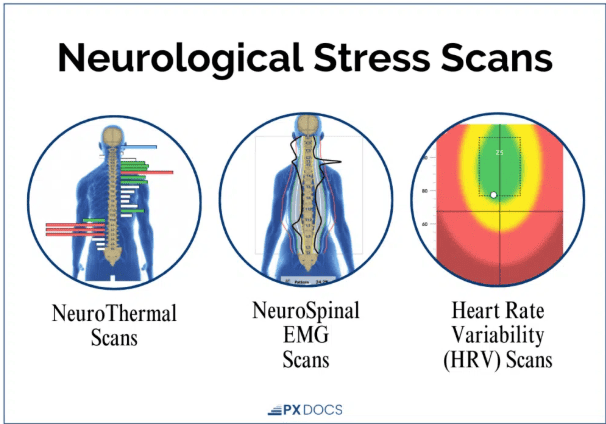
INSiGHT Scans include three safe, non-invasive assessments that together provide a picture of nervous system function.
Thermal Scan
Measures temperature differences along the spine that may reflect changes in autonomic nervous system function.
Surface EMG (sEMG)
Measures muscle tension patterns along the spine, showing how much stress the nervous system is placing on the body.
Heart Rate Variability (HRV)
Measures how well the sympathetic and parasympathetic nervous systems are working together and how adaptable the body is to stress.
The scans are quick, painless, and involve no radiation or needles.
It’s important to understand that INSiGHT Scans are not a treatment and they do not diagnose medical conditions. They simply provide objective information about nervous system function to help guide care.
Why Do We Scan Instead of Just Adjusting?
Objective measurement helps remove the guesswork.
Rather than relying only on posture, physical exams, or symptoms, scans provide measurable data that helps doctors understand where the nervous system is under stress and how care should be customized.
The scans also help illustrate the effects of the “Perfect Storm”–the combination of prenatal stress, birth interventions, and childhood stressors that can overwhelm a developing nervous system.
Combined with a thorough examination, scan findings help guide where care should be focused and allow doctors to track progress over time.
What Happens When You Re-Scan Over Time?
Progress scans help answer an important question:
Is your child’s nervous system actually improving?
As regulation improves, providers often see:
- Better Heart Rate Variability
- More balanced muscle tension
- Improved thermal patterns
These changes often appear before parents notice major symptom improvements.
That’s one reason re-scanning is so valuable–it allows families to see progress happening beneath the surface while the body continues healing.
Sometimes scans also reveal that a child’s progress is influenced by the stress levels of those around them. Because nervous systems co-regulate, supporting the health of the entire family can sometimes support better outcomes for the child.
The Bottom Line on Why We Scan
Measuring nervous system function helps answer a question that symptoms alone cannot:
Is your child’s nervous system regulating well, or is it stuck in stress mode?
Rather than chasing individual symptoms, INSiGHT Scans provide objective information that helps doctors focus on the underlying function of the nervous system.
The biggest takeaways are simple:
- Symptoms usually appear after nervous system stress has already developed.
- Structure and function are different–and both matter.
- Objective measurements allow families and providers to track real progress over time.
If your child has gone through multiple evaluations without clear answers, measuring nervous system function may provide another important piece of the puzzle. While INSiGHT Scans don’t diagnose medical conditions or replace your pediatrician, they can offer valuable insight into how your child’s nervous system is functioning and help guide individualized care.
Frequently Asked Questions
Why do chiropractors scan the nervous system instead of only taking X-rays?
X-rays show the structure of the spine. INSiGHT Scans measure how the nervous system is functioning. Both provide different information, but scans help evaluate how well the brain and body are communicating.
Are INSiGHT Scans safe for children?
Yes. The scans are non-invasive, painless, and involve no radiation or needles.
Can nervous system stress be measured before symptoms appear?
Yes. Changes in nervous system regulation often occur before noticeable symptoms develop, making early measurement valuable.
What do INSiGHT Scans measure?
They measure three areas:
- Heart Rate Variability (HRV)
- Surface Electromyography (sEMG)
- Thermal scanning
Together, these provide an overall picture of nervous system function.
Do INSiGHT Scans diagnose Autism, ADHD, or other conditions?
No. They do not diagnose medical conditions. They measure nervous system function, which may help providers better understand how a child’s body is responding to stress.
How often should my child be re-scanned?
Re-scans are typically scheduled throughout care to objectively monitor changes in nervous system function and help guide ongoing recommendations.
Why is measuring mom’s nervous system important during pregnancy?
A mother’s nervous system influences her baby’s developing nervous system. Measuring regulation during pregnancy can provide valuable insight into both mom’s health and her baby’s early development.
Request an appointment with us today to get started!
Not local to Inspire? Don’t worry! Visit the PX Docs Directory to find a qualified provider near you. https://pxdocs.com/px-docs/
Original Article: https://pxdocs.com/natural-remedies/why-we-scan/
PX Docs has established sourcing guidelines and relies on relevant, and credible sources for the data, facts, and expert insights and analysis we reference. You can learn more about our mission, ethics, and how we cite sources in our editorial policy.
SOURCES
- McCorry L. K. (2007). Physiology of the autonomic nervous system. American journal of pharmaceutical education, 71(4), 78. https://doi.org/10.5688/aj710478
- Owens, A. P., Mathias, C. J., & Iodice, V. (2021). Autonomic Dysfunction in Autism Spectrum Disorder. Frontiers in integrative neuroscience, 15, 787037. https://doi.org/10.3389/fnint.2021.787037
- Tadanki, D., Kaza, P. S., Meisinger, E., Syed, A., Johnson, A., Bainbridge, G., Cho, M., Anigbogu, C., & Gupta, G. (2025). Comprehensive Review of the Impact of Maternal Stress on Fetal Development. Pediatric discovery, 3(3), e70004. https://doi.org/10.1002/pdi3.70004